






Introduction
The excretory system is an important organ system in the human body that helps remove metabolic waste products and excess substances. During various metabolic activities, the body produces waste materials such as urea, carbon dioxide, excess salts and water. If these substances accumulate in the body, they can become harmful to health. The excretory system removes these wastes and helps maintain the body’s internal balance, a process known as homeostasis.
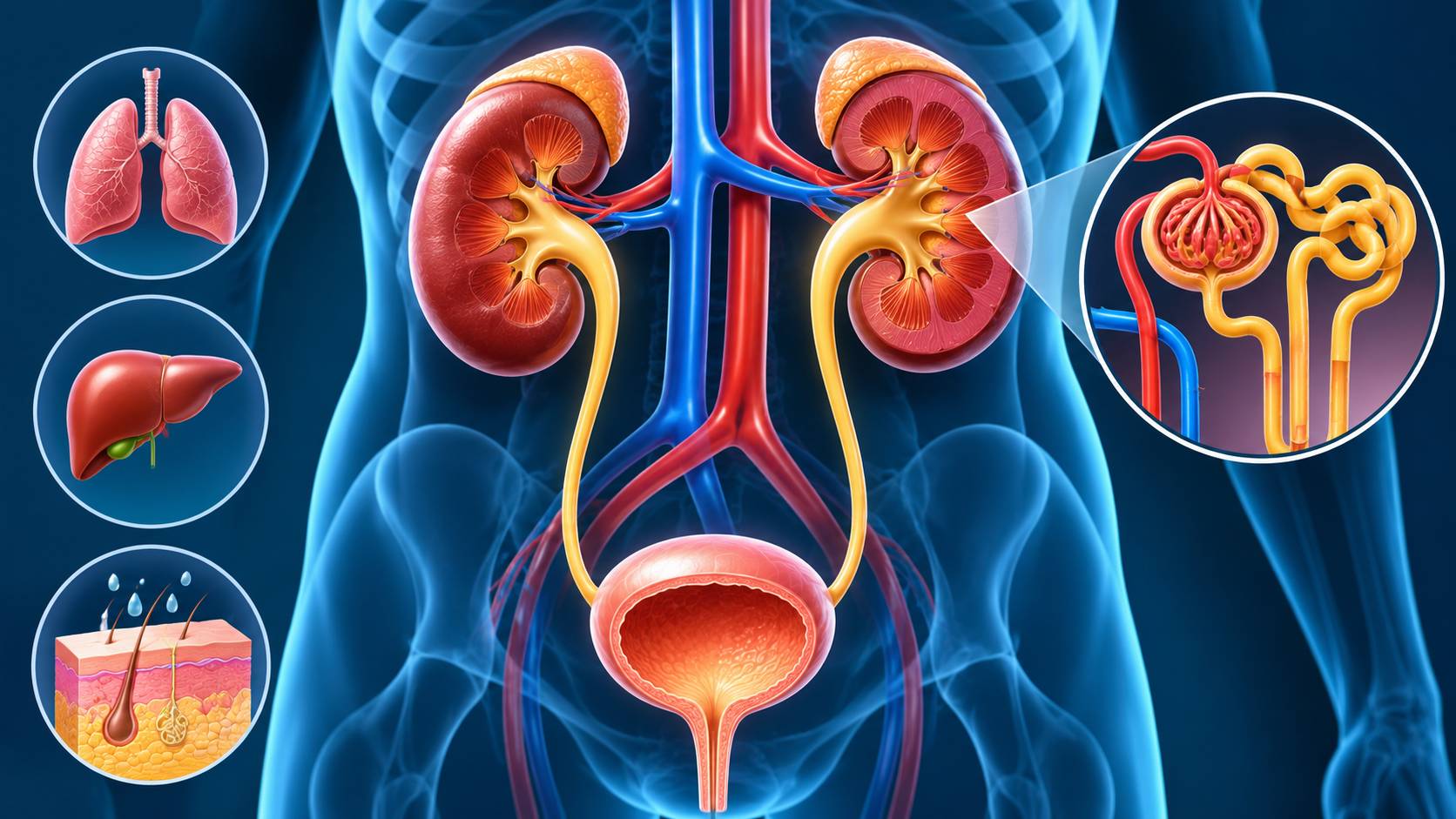
In humans, the kidneys are the main organs of the excretory system. Other organs, including the lungs, skin and liver, also contribute to the removal of waste products.
Organs of the Human Excretory System
The human urinary system consists of four major organs:
1. Kidneys
The kidneys are two bean-shaped organs located on either side of the vertebral column, near the lower back. They filter blood and remove waste products, excess water and salts to form urine. Each kidney contains approximately one million microscopic filtering units called nephrons.
2. Ureters
The ureters are two narrow muscular tubes that connect the kidneys to the urinary bladder. They transport urine from the kidneys to the bladder through rhythmic muscular contractions.
3. Urinary Bladder
The urinary bladder is a hollow, muscular organ that temporarily stores urine. When the bladder becomes sufficiently full, nerve signals create the sensation of needing to urinate.
4. Urethra
The urethra is the tube through which urine is expelled from the body. A muscular structure called the urethral sphincter helps control the release of urine.
How Does the Excretory System Work?
The process of urine formation takes place in the kidneys and involves three major steps:
- Filtration: Blood enters the kidneys through the renal arteries. Tiny filtering structures called glomeruli filter water and small dissolved substances from the blood.
- Reabsorption: Useful substances such as glucose, amino acids, essential salts and most of the filtered water are reabsorbed into the bloodstream.
- Secretion: Additional waste substances and excess ions are transferred from the blood into the kidney tubules.
The remaining fluid forms urine, which passes through the ureters into the urinary bladder. It is eventually expelled from the body through the urethra.
Functions of the Excretory System
The major functions of the human excretory system include:
- Removing metabolic waste products such as urea.
- Maintaining the balance of water and electrolytes.
- Regulating blood pressure.
- Maintaining the acid-base balance of the body.
- Removing excess salts and other unwanted substances.
- Supporting the production of red blood cells through the hormone erythropoietin.
- Helping maintain the body’s internal environment.
Other Organs Involved in Excretion
Apart from the kidneys, several other organs help eliminate waste products:
- Lungs: Remove carbon dioxide and water vapour during exhalation.
- Skin: Eliminates small amounts of water, salts and urea through sweat.
- Liver: Converts toxic ammonia into less toxic urea and helps process various harmful substances for elimination.
How to Keep the Excretory System Healthy
A healthy lifestyle helps maintain proper kidney and urinary system function. Important practices include drinking adequate water, eating a balanced diet, limiting excessive salt intake, exercising regularly and avoiding unnecessary use of medications that may damage the kidneys.
Conclusion
The excretory system plays a vital role in maintaining human health by removing metabolic wastes and regulating the body’s internal environment. The kidneys, ureters, urinary bladder and urethra work together to produce, transport, store and eliminate urine. Proper functioning of this system is essential for maintaining homeostasis and ensuring the normal functioning of the human body.