
Home Blog Page 583

The International Atomic Energy Agency (IAEA)

2
International Atomic Energy Agency

The International Atomic Energy Agency (IAEA) is an international organization that seeks to promote the peaceful use of nuclear energy, and to inhibit its use for any military purpose, including nuclear weapons. The IAEA was established as an autonomous organization on 29 July 1957. Though established independently of the United Nations through its own international treaty, the International Atomic Energy Agency Statute, the IAEA reports to both the United Nations General Assembly and Security Council.

The IAEA has its headquarters in Vienna, Austria. The International Atomic Energy Agency has two “Regional Safeguards Offices” which are located in Toronto, Canada, and in Tokyo, Japan. The IAEA also has two liaison offices which are located in New York City, United States, and in Geneva, Switzerland. In addition, the International Atomic Energy Agency has three laboratories located in Vienna and Seibersdorf, Austria, and in Monaco.

Must Read: United Nations (UN) and its Principal Organs

The International Atomic Energy Agency serves as an intergovernmental forum for scientific and technical cooperation in the peaceful use of nuclear technology and nuclear power worldwide. The programs of the International Atomic Energy Agency encourage the development of the peaceful applications of nuclear technology, provide international safeguards against misuse of nuclear technology and nuclear materials, and promote nuclear safety (including radiation protection) and nuclear security standards and their implementation.

The International Atomic Energy Agency and its former Director General, Mohamed El Baradei, were jointly awarded the Nobel Peace Prize on 7 October 2005. The IAEA’s current Director General is Yukiya Amano.

In 1953, the President of the United States, Dwight D. Eisenhower, proposed the creation of an international body to both regulate and promote the peaceful use of atomic power (nuclear power), in his Atoms for Peace address to the UN General Assembly.

Also Read: United Nations Educational Scientific and Cultural Organisation (UNESCO)

Three main pillars or areas of work underpin the IAEA’s mission:

  • Safety and Security;
  • Science and Technology; and
  • Safeguards and Verification.

The International Atomic Energy Agency is generally described as having three missions:

  • Peaceful uses: Promoting the peaceful uses of nuclear energy by its member states,
  • Safeguards: Implementing safeguards to verify that nuclear energy is not used for military purposes,
  • Nuclear safety: Promoting high standards for nuclear safety.

The International Atomic Energy Agency has 162 member states. International Atomic Energy Agency programmes and budgets are set through decisions of its policymaking bodies – the 35-member Board of Governors and the General Conference of all Member States. Reports on International Atomic Energy Agency activities are submitted periodically or as cases warrant to the UN Security Council and UN General Assembly.

The IAEA reports annually to the UN General Assembly and, when appropriate, to the Security Council regarding non-compliance by States with their safeguards obligations as well as on matters relating to international peace and security.

Don’t Miss: The United Nations Environment Programme (UNEP)
Albert Einstein

0
Albert_Einstein
Albert_Einstein

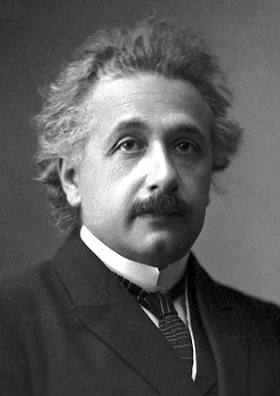
Albert Einstein was a German-born theoretical physicist. He developed the general theory of relativity, one of the two pillars of modern physics (alongside quantum mechanics). He is best known for his mass–energy equivalence formula E = mc2. He received the 1921 Nobel Prize in Physics “for his services to theoretical physics, and especially for his discovery of the law of the photoelectric effect”. The latter was pivotal in establishing a quantum theory.

Einstein investigated the thermal properties of light which laid the foundation of the photon theory of light. In 1917, Einstein applied the general theory of relativity to model the large-scale structure of the universe.

Einstein published more than 300 scientific papers along with over 150 non-scientific works. His great intellectual achievements and originality have made the word “Einstein” synonymous with genius.

Read Also: Famous scientists and their Contribution or Discoveries

In 1914 he was appointed Director of the Kaiser Wilhelm Physical Institute and Professor in the University of Berlin. He became a German citizen in 1914 and remained in Berlin until 1933 when he renounced his citizenship for political reasons and emigrated to America to take the position of Professor of Theoretical Physics at Princeton*. He became a United States citizen in 1940 and retired from his post in 1945.

After World War II, Einstein was a leading figure in the World Government Movement, he was offered the Presidency of the State of Israel, which he declined, and he collaborated with Dr. Chaim Weizmann in establishing the Hebrew University of Jerusalem.

After Einstein’s retirement, he continued to work towards the unification of the basic concepts of physics, taking the opposite approach, geometrisation, to the majority of physicists.

Einstein’s researches are, of course, well chronicled and his more important works include Special Theory of Relativity (1905), Relativity, General Theory of Relativity (1916), Investigations on Theory of Brownian Movement (1926), and The Evolution of Physics (1938). Among his non-scientific works, About Zionism (1930), Why War? (1933), My Philosophy (1934), and Out of My Later Years (1950) are perhaps the most important.

Albert Einstein received honorary doctorate degrees in science, medicine, and philosophy from many European and American universities. During the 1920’s he lectured in Europe, America, and the Far East, and he was awarded Fellowships or Memberships of all the leading scientific academies throughout the world.

Einstein’s gifts inevitably resulted in his dwelling much in intellectual solitude and, for relaxation, music played an important part in his life. He married Mileva Maric in 1903 and they had a daughter and two sons; their marriage was dissolved in 1919 and in the same year he married his cousin, Elsa Löwenthal, who died in 1936. He died on April 18, 1955, in Princeton, New Jersey.

Must Read:

Scientists and Inventors

Interesting facts to know about India

0
India
India
  1. Indian Railways have maximum no. of employees in the world that is about 1.6 million also about 5 Billion people travel by Indian railways in a year.
  2. India was one of the richest countries till the time of British rule in the early 17th Century. Christopher Columbus, attracted by India’s wealth, had come looking for a sea route to India when he discovered America by mistake.
  3. The Baily Bridge is the highest bridge in the world. It is located in the Ladakh valley between the Dras and Suru rivers in the Himalayan mountains. It was built by the Indian Army in August 1982
  4. India has no National Language. Hindi is an official language used in many regions, English is also commonly used in many regions.
  5. The name “India” comes from the Indus River, which is where earliest settlers made their homes. The Indus valley is one of the world’s earliest urban civilizations.
  6. India is the world’s largest democracy, with 1.2 billion people.
  7. The world’s biggest family lives together in India: a man with 39 wives and 94 children.
  8. India was once a continent. More than 100 million years ago, when dinosaurs roamed the earth, most of what is now India was an island.
  9. India is the world’s biggest producer and consumer of mangoes. More than 40% of the world’s annual output of mangoes are grown in India, far ahead of the competition from China, Thailand, and Bangladesh.
  10. Mother Teresa first donned her famous sari in 198; it’s now the uniform for nuns in her order.
  11. Mumbai’s dabbawallahs deliver over 2,00,000 lunch boxes by bike and train from home to office daily
  12. The state of Meghalaya, northeast India’s “adobe of clouds”, is the wettest inhabited place on earth.
  13. Tea had been growing in India for centuries before the British began its commercial cultivation.
  14. The Himalayas contain nine of the world’s ten highest peaks.
  15. Alcohol consumption is banned in five Indian States; the drinking age varies from 18 to 30.
  16. Bollywood is the world’s largest film industry, followed by Nigeria’s Nollywood and Hollywood.
  17. 80% of India’s population are Hindu, 13% are Muslim and millions are Sikh, Jain or Christian.
  18. In rural Bihar, Nalanda, one of the world’s most ancient universities, is being rebuilt.
  19. India produces staggering 4700 daily papers in over 300 languages, plus39,000 journals & weeklies.
  20. Khari Baoli, in New Delhi, is Asia’s largest wholesale spice market.

Must Read:

Interesting facts about Indian Independence Day

Top Universities in India

National Festivals of India

Heads of Indian Organizations :

0
Heads of Indian Organizations :


ASSOCHAM – Rana Kapoor
Attorney General of India – Mukul Rohatgi
Bombay Stock Exchange – Ashish Chauhan
CAG – Shashi Kant Sharma
CBDT – R.K. Tewari
CBI – Ranjeet Sinha
CCI – Ashok Chawla
Chief Economic Advisor – Siddharth Tiwari
Chief Election Commissionor – V.S.Sampath
DRDO – Avinash Chander
FICCI – Sidharth Birla
IB – Saiyad Ashif Ibrahim
IRDA – T.S.Vijayan
ISRO – Dr. K. Radhakrishnan
NABARD – Dr. Harsh Kumar Bhanwala
NASSCOM – Krishna kumar Natrajan
National Commission for women – Mamta Sharma
National Innovation Council – Sam Pitroda
National Security Advisor – Ajit Kumar Doval
National Stock Exchange – Chitra Ramkrishna
PM Economic Advisor – C.Rangrajan
Press Council of India – Marandey Katju
Press Trust of India – K N Shanth Kumar
RBI – Raghu Ram Rajan
RAW – Alok Joshi
SBI – Arundhathi Bhattacharya
SEBI – U.K. Sinha
SSC – Amitava Bhattacharyya
TRAI – Rahul Khullar
UGC – Ved Prakash
UPSC – D.P. Agarwal

INDIAN STATES ON INTERNATIONAL BOUNDARIES

2

INDIAN STATES ON INTERNATIONAL BOUNDARIES

1) Bordering Pakistan :-
Jammu and Kashmir, Punjab, Rajasthan and Gujrat

2) Bordering China :-
Jammu and Kashmir, Himachal Pradesh, Uttarakhand, Sikkim and Arunachal Pradesh

3) Bordering Nepal :-
Bihar, Uttarakhand, Uttar Pradesh, Sikkim and West Bengal

4) Bordering Bangladesh :-
West Bengal, Mizoram, Meghalaya, Tripura and Assam

5) Bordering Bhutan :-
West Bengal, Sikkim, Arunachal Pradesh and Assam

6) Bordering Myanmar :-
Arunachal Pradesh, Nagaland, Manipur and Mizoram

7) Bordering Afghanistan :-
Jammu and Kashmir (Pakistan-Occupied Area)