The refrigerator door has to be opened at times to put things in or take things out. When that happens, some outside air is bound to enter the refrigerator. Usually the air coming in from outside has higher humidity than the air in the inside. The mixing of the inner and outer air, therefore, leads to condensation of mois¬ture. This builds up on the cold cooling surface of the refrigerator, where it deposits as frost. This process goes on and on as the fridge is opened and shut frequently. Ultimately, one ends up with thick layers of frost in the deep freezer compartment of the refrigerator.
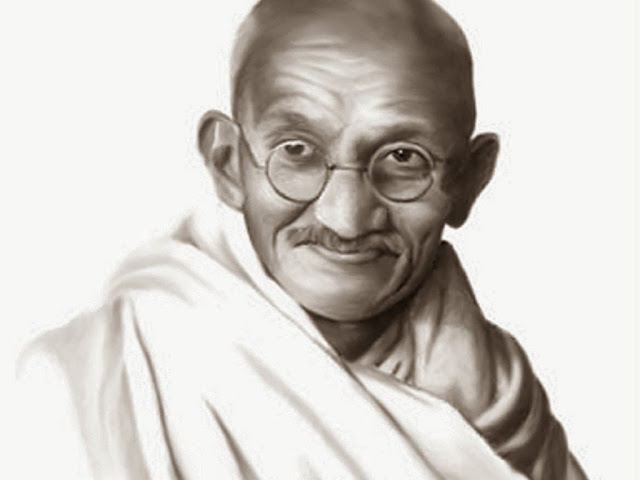
God and an individual who had possessions got them only from him. Therefore, they did not belong to one individual but were meant for God’s people as a whole. Thus, whatever a person had more than this proportionate share with him, he was a trustee of God for that portion of his people. He elaborated that the almighty who was all-powerful had no need to store for tomorrow and created from day-to-day. So if human beings also learn to live from day to day and do not stock things, trusteeship would become a legalised institution.
The trustee would remain the legal owner during his lifetime and would also have the right to nominate his successor subject to legal sanction. The property would not be confiscated by State and society will be able to retain the ability of the original owner on his own right. Gandhiji, in fact, wished his concept of trusteeship to become a gift from India to the world.
Gandhiji had a firm conviction that his theory of trusteeship was not illusory or fanciful. He claimed, “My theory of ‘trusteeship’ is no make-shift, certainly no camouflage. I am confident that it will survive all other theories. It has the Sanction of philosophy and religion behind it. That possessors of wealth have not acted up to the theory does not prove its falsity; it proves the weakness of the wealthy.” His idea was that society should avoid violence and conflict between labour and capital and haves and have-nots as a result of its acceptance of the concept of trusteeship in wealth and property.
Pyarelal, who was Gandhiji’s secretary, has summarised his views on trusteeship as under :
Trusteeship provides a means of transforming the present capitalist order of society into an egalitarian one.
It does not recognise any right of private property except to the extent permitted by society’ for its own welfare.
It does not exclude legislative regulation of ownership and use of wealth.
An individual is not free to hold or use his wealth for selfish satisfaction.
Like the minimum wages, there should also be a limit upon the maximum income and the difference between the maximum and the minimum should be reasonable and equitable. It would also be variable from time to time so that the tendency would be towards obliteration of the difference.
The character of production shall be governed by social necessity and not by personal greed or whim.
‘Democracy’ is probably the most cherished ideal our founding fathers had on the idea of India. At the time of her inception, India was doomed to fail in the eyes of every other so-called ‘intellectual’ and ‘political analyst’. It was unfathomable for them that a nation as diverse as ours could survive, let alone flourish. But lo and behold! India did not just survive, but thrived and is well on course to regain her past glory. Contributing to our astounding success story is our vibrant democracy. Even the staunchest critics of our democratic system cannot help conceding this fact. Into the seventh decade of Independence, we have come a long way. Be it self-sufficiency in food production, development and mastery of cutting-edge technology in space, missile and nuclear field, or our economic success story, we are today recognised as an elite global power, a far cry from the global pariah, many believed that we were destined for. For an optimist, the world’s largest democracy is well on course to become one of the greatest and most powerful democracies in the world as well. But for all the optimists, the vexed question about the rot that has set in our political system remains, rather it is looming large. Trust of the public in our polity has taken a severe beating as systematic corruption continues to cast its long shadow over the entire political spectrum. Corruption has spread like a cancer-in our entire system, condemning lofty ideals of our erstwhile leaders to a nadir. Public accountability and integrity of our political class and bureaucracy have sunk to abysmal lows. This Is not to outrighdy condemn the entire political class or bureaucracy, as there are still a great many number of fine men and women of unquestionable integrity and unwavering commitment towering over the horizon. But the fact remains that we are at crossroads. We are having a major crisis and it is paramount that we accept the hard truth rather than trying to brazen it out. We have to keep in mind that corruption is universal in nature and not specific to our country. But the level of public corruption in India has reached gigantic proportions, shaking the very foundation of our great liberal democracy perception about our political class is probably at its lowest ebb since Independence. Massive scandals have indeed corroded people’s faith in democracy and probably for the first time, people are asking hard questions about the viability of democracy in India. Given the sober circumstances, one could be forgiven for thinking that the future of democracy is bleak in India. But democracy is too great an institution to crumble very easily. More so in the Indian context, as democratic ideals envisaged by our founding fathers are deeply engraved in our psyche and have grown strong roots, as evident in India remaining an oasis of stability amidst the failing nations around us. Indian democracy has evolved a great deal since Independence. Political landscape of our nation has also changed beyond recognition. In this age of coalition politics, single-party governments appear to be a relic of the past. Coalition system has helped give regional parties a greater say in the governance of the country, effectively strengthening our federal structure. Also, they have helped curb the autocratic tendencies of leaders of large political parties. But in the absence of strong leaders, it has more often than not wreaked havoc on governance, resulting in policy paralysis and growth stagnation. Coalition compulsions are also considered as a major roadblock in ensuring integrity of the government. But as things stand now, coalition system seems to be the only way and will have a huge bearing on the future of Indian democracy. In the recent past, we witnessed phenomenal movements against corruption led by the likes of Anna Hazare and Arvind Kejriwal. Some of the activists of the movement went as far as outrightly condemning our Constitution and democratic system. But it is the strength of our democracy that they were able to organise such large-scale agitations against the Government which would be unthinkable in an autocracy. Even in this troubled times, this very fact gives us a lot of confidence in our political system. We have to accept that our democracy .has its own inherent flaws. But then no system is flawless and the past experiences across the globe show us that a liberal democratic system is our best bet in ensuring progress, good governance and freedom for the citizens to follow their own free will with some reasonable restrictions. India has a very fertile soil for democracy to thrive in. Our institutions like the executive, judiciary, government and the armed forces work in perfect synergy more often than not. We do not have a hyper-assertive judiciary crossing Constitutional boundaries, trying to dictate terms to a democratically-elected government. Our armed forces’ loyalty has always been above reproach. I cannot see our military trying to sabotage the government either coverdy or overdy. Unless the nation plunges into total chaos and anarchy, it is a safe bet that military rule would not just happen here. While considering the future of democracy in India, we cannot overlook Naxalite menace, described as the gravest single threat to our nation. Naxals have scant regard for our Constitution and democracy. Their objective is to overthrow the Indian state and seize power through the barrel of gun. And they do not mind slaughtering fellow citizens to fructify their Utopian dream. But in reality, Naxals do not stand a chance in an all out war against the might of Indian state. Put simply, they do not have it in them to overthrow our democratic system. There is a growing chorus that the Indian democracy is at crossroads because of the disenchantment of the public with the system. But if we look into the matter, it will dawn upon us that disenchantment is with our leaders or political parties, rather than with the system as a whole. Democracy is our greatest strength. The right to vote and elect our government brings parity between the richest of the rich and the poorest of the poor. Democracy is the cornerstone of the idea of India. So we can easily conclude that future of democracy as the mode of governance is safe. The question is about the duality of democracy. Will our political class be able to reinvent and redeem themselves in the eyes of the public ? There is no reason they should not be able to. There is a growing awareness among the public about the corruption and nepotism prevailing even amid the higher echelons of power and they are not forgiving any more. This will hopefully goad our leaders to take a tough stand on corruption and deliver good governance. Growing influx of the youth into politics is another thing that bodes well for our democracy. We need young men and women of quality, integrity and commitment to resuscitate our ailing system. Today, we are recognised as a benign responsible power whose ascendancy as a global elite is welcomed by most in the comity of nations. This has more to do with our vibrant liberal democratic system than anything else. As India continues its rise as a leader of global commons, it is imperative that our leadership has the desired quality to discharge our growing responsibilities and to safeguard our core interests. Hopefully our time-tested democratic system will once again churn out great leaders as it did with Gandhi, Nehru, Patel, Vajpayee, and many more. Future of democracy is safe in India. But the quality of democracy we can sustain will have, a major impact in determining India’s course to fulfil her destiny as the world warms up to India’s new standing as a great power.
Ms. Maitreyee Dutta Ms. Maitreyee Dutta hails from Guwahati, Assam. She is pursuing B.Tech (Electrical) from NIT, Silchar, Assam. She has put forth her thoughts in a clear-cut way, and has written the Essay in a yet captivating English. It is aptly said, ‘Necessity is the mother of invention.’ Inventions have been made out of sheer necessities. If we had been able to easily get/fulfil all we want from ‘Nature’, we would never have bothered to invent anything. Our necessities are the driving force behind every invention. After the occurrence of the ‘Big Bang’, came the inhabitation of a nascent cooling planet called Earth, in a galaxy namely the Milky Way. Here, a miraculous combination of simple organic compounds like nucleobases and amino acids, building blocks of life, brought about a quintessential era of nature in which all the species lived in harmony. Hitherto, one among all the species— hominid has thrived upon others as it found the necessity to understand the ways of the universe, as a result of which its brains developed through each evolutionary step from apelike Australopithecus to homo habilis to homo erectus leading to the biological invention of the most advanced homo sapiens. The great Greek philosopher, Plato himself condensed the very gem of invention in the form of the word ‘necessity’ in his book Republica, “let us begin and create in idea a State; and yet a true creator is necessity, which is the mother of our invention.” It was as if he stumbled upon the very basic secret of development made by man because of his strong desire and necessity to struggle against obstruction, and to leave no stone unturned in making his life more comfortable, and so this man’s catharsis takes place in the form of invention. History itself has witnessed the veracity of this fact. Deep into the archaic era, the evangelist and clerical priests held a monopoly over all sacred books and made people believe in religion blindly. This led to large-scale poverty, superstition and illiteracy among the lower middle class, and decadence among the creme de la creme. The necessity to dispel ignorance and spread knowledge led Johannes Gutenberg to invent the mechanical movable-type printer which heralded the dawn of illumination; the downtrodden and women from all walks of life were finally able to access books as they were cheap. Soon enough they learned the scientific reason behind every phenomenon and all about their birthrights. In the 19th century, telegraph message traffic was brimming up to the zenith. The Western Union Telegraph Company President of the time, William Orton had contacted several inventors to find a way to send multiple telegraph messages on a single telegraph line to avoid the cost of expanding new lines. At this time, Alexander Graham Bell experimented with several abstract ideas to create sporadic electric current corresponding to every sound wave. This great man finally invented the telephone which not only helped the telegraph industry, but also created a communication bridge between every nook and comer of the world. Rene Laennec, a physicist, realised to his utter dismay that it was really difficult to count and monitor the heart beats of all the patients suffering from cardiovascular diseases. This necessity helped Rene create the world’s first stethoscope which today helps not only in the detection of arrhythmia, but also several other respiratory diseases such as bronchial fibrosis, pneumonia, etc. These illustrations simply reveal that necessity is the mother of invention. It can be in the form of a better life or money or uplift of the society, or sometimes survival. One of the cases for the necessity of survival arising from the verge of catastrophe was showcased in the World War II, when Japan proved to be a strong enemy against the Allies after the bombing of the Pearl Harbour. With desperation and coercion of the fellow scientists, Julius Robert Oppenheimer developed the first atomic bomb, and the rest, as we know, is history. Even though the outcome was deadly, it clearly shows that necessity can bring out the highest potential hidden within every individual, be it psychological, social, economical, cultural or political—in terms of theories or practical. NECESSITY IS THE MOTHER OF INVENTION
Ms. Maitreyee Dutta
Ms. Maitreyee Dutta hails from Guwahati, Assam. She is pursuing B.Tech (Electrical) from NIT, Silchar, Assam. She has put forth her thoughts in a clear-cut way, and has written the Essay in a yet captivating English. It is aptly said, ‘Necessity is the mother of invention.’ Inventions have been made out of sheer necessities. If we had been able to easily get/fulfil all we want from ‘Nature’, we would never have bothered to invent anything. Our necessities are the driving force behind every invention. After the occurrence of the ‘Big Bang’, came the inhabitation of a nascent cooling planet called Earth, in a galaxy namely the Milky Way. Here, a miraculous combination of simple organic compounds like nucleobases and amino acids, building blocks of life, brought about a quintessential era of nature in which all the species lived in harmony. Hitherto, one among all the species— hominid has thrived upon others as it found the necessity to understand the ways of the universe, as a result of which its brains developed through each evolutionary step from apelike Australopithecus to homo habilis to homo erectus leading to the biological invention of the most advanced homo sapiens. The great Greek philosopher, Plato himself condensed the very gem of invention in the form of the word ‘necessity’ in his book Republica, “let us begin and create in idea a State; and yet a true creator is necessity, which is the mother of our invention.” It was as if he stumbled upon the very basic secret of development made by man because of his strong desire and necessity to struggle against obstruction, and to leave no stone unturned in making his life more comfortable, and so this man’s catharsis takes place in the form of invention. History itself has witnessed the veracity of this fact. Deep into the archaic era, the evangelist and clerical priests held a monopoly over all sacred books and made people believe in religion blindly. This led to large-scale poverty, superstition and illiteracy among the lower middle class, and decadence among the creme de la creme. The necessity to dispel ignorance and spread knowledge led Johannes Gutenberg to invent the mechanical movable-type printer which heralded the dawn of illumination; the downtrodden and women from all walks of life were finally able to access books as they were cheap. Soon enough they learned the scientific reason behind every phenomenon and all about their birthrights. In the 19th century, telegraph message traffic was brimming up to the zenith. The Western Union Telegraph Company President of the time, William Orton had contacted several inventors to find a way to send multiple telegraph messages on a single telegraph line to avoid the cost of expanding new lines. At this time, Alexander Graham Bell experimented with several abstract ideas to create sporadic electric current corresponding to every sound wave. This great man finally invented the telephone which not only helped the telegraph industry, but also created a communication bridge between every nook and comer of the world. Rene Laennec, a physicist, realised to his utter dismay that it was really difficult to count and monitor the heart beats of all the patients suffering from cardiovascular diseases. This necessity helped Rene create the world’s first stethoscope which today helps not only in the detection of arrhythmia, but also several other respiratory diseases such as bronchial fibrosis, pneumonia, etc. These illustrations simply reveal that necessity is the mother of invention. It can be in the form of a better life or money or uplift of the society, or sometimes survival. One of the cases for the necessity of survival arising from the verge of catastrophe was showcased in the World War II, when Japan proved to be a strong enemy against the Allies after the bombing of the Pearl Harbour. With desperation and coercion of the fellow scientists, Julius Robert Oppenheimer developed the first atomic bomb, and the rest, as we know, is history. Even though the outcome was deadly, it clearly shows that necessity can bring out the highest potential hidden within every individual, be it psychological, social, economical, cultural or political—in terms of theories or practical.
To provide the best experiences, we use technologies like cookies to store and/or access device information. Consenting to these technologies will allow us to process data such as browsing behavior or unique IDs on this site. Not consenting or withdrawing consent, may adversely affect certain features and functions.
Functional
Always active
The technical storage or access is strictly necessary for the legitimate purpose of enabling the use of a specific service explicitly requested by the subscriber or user, or for the sole purpose of carrying out the transmission of a communication over an electronic communications network.
Preferences
The technical storage or access is necessary for the legitimate purpose of storing preferences that are not requested by the subscriber or user.
Statistics
The technical storage or access that is used exclusively for statistical purposes.The technical storage or access that is used exclusively for anonymous statistical purposes. Without a subpoena, voluntary compliance on the part of your Internet Service Provider, or additional records from a third party, information stored or retrieved for this purpose alone cannot usually be used to identify you.
Marketing
The technical storage or access is required to create user profiles to send advertising, or to track the user on a website or across several websites for similar marketing purposes.