
Home Blog Page 599

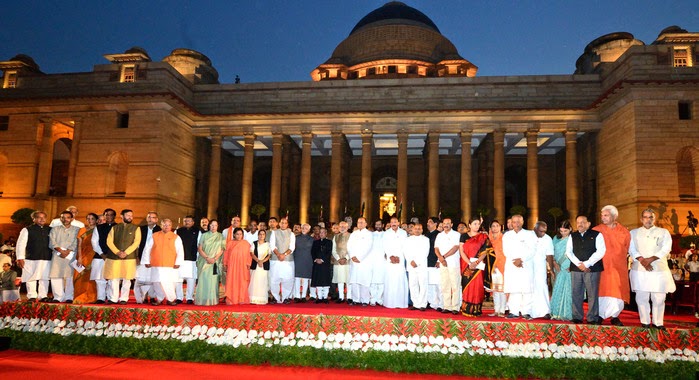
Prime Minister and Council of Ministers(2014)- India

0
Prime Minister and Council of Ministers(2014)- India
————————————————————–


Cabinet Ministers:
—————————
1. Prime Minister and also in-charge of the Ministries/Departments not specifically allocated to the charge of any Minister , Personnel, Public Grievances and Pensions & Department of Atomic Energy Department of Space — Narendra Modi
2. Home Affairs — Rajnath Singh
3. External Affairs, Overseas Indian Affairs — Sushma Swaraj
4. Finance, Corporate Affairs, Defence — Arun Jaitley
5. Urban Development Housing, Urban Poverty Alleviation, Parliamentary Affairs — M Venkaiah Naidu
6. Road Transport, Highways Shipping — Nitin Gadkari
7. Railways — D V Sadananda Gowda
8. Water Resources, River Development and Ganga Rejuvenation — Uma Bharati
9. Minority Affairs — Dr Najma A Heptulla
10. Rural Development, Panchayati Raj, Drinking Water and Sanitation — ———–NITIN GADKARI———–
11. Consumer Affairs, Food and Public Distribution — Ram Vilas Paswan
12. Micro, Small and Medium Enterprises — Kalraj Mishra
13. Women and Child Development — Maneka Gandhi
14. Chemicals and Fertilizers — Ananth Kumar
15. Communications and Information Technology, Law and Justice — Ravi Shankar Prasad
16. Civil Aviation — Ashok Gajapathi Raju Pusapati
17. Heavy Industries and Public Enterprises — Anant Geete
18. Food Processing Industries — Harsimrat Kaur Badal
19. Mines Steel Labour and Employment — Narendra Singh Tomar
20. Tribal Affairs — Jual Oram
21. Agriculture — Radha Mohan Singh
22. Social Justice and Empowerment — Thaawar Chand Gehlot
23. Human Resource Development — Smriti Irani
24. Health and Family Welfare — Dr Harsh Vardhan

Ministers of State with Independent Charge:
——————————————————
1. Development of North Eastern Region, External Affairs, Overseas Indian Affairs — General VK Singh
2. Planning, Statistics and Programme Implementation,Defence — Inderjit Singh Rao
3. Textiles, Parliamentary Affairs, Water Resources, River Development and Ganga Rejuvenation — Santosh Kumar Gangwar
4. Culture and Tourism — Shripad Yesso Naik
5. Petroleum and Natural Gas — Dharmendra Pradhan
6. Skill Development, Entrepreneurship, Youth Affairs and Sports — Sarbananda Sonowal
7. Information and Broadcasting Environment, Forest and Climate Change, Parliamentary Affairs — Prakash Javadekar
8. Power, Coal, New and Renewable Energy — Piyush Goyal
9. Science and Technology Earth Sciences Prime Minister Office Personnel, Public Grievances & Pensions Department of Atomic Energy, Department of Space — Jitendra Singh
10. Commerce and Industry, Finance Corporate Affairs — Nirmala Sitharaman.
Ministers of State:
——————————————————————-
1. Civil Aviation — GM Siddeshwara
2. Railways — Manoj Sinha
3. Chemicals and Fertilizers — Nihalchand
4. Rural Development Panchayati Raj Drinking Water and — Sanitation Upendra Kushwaha
5. Heavy Industries and Public Enterprises — Radhakrishnan P
6. Home Affairs — Kiren Rijiju
7. Road Transport and Highways Shipping — Krishan Pal
8. Agriculture, Food Processing Industries — Dr Sanjeev Kumar Balyan
9. Tribal Affairs — Mansukhbhai Dhanjibhai Vasava
10 Consumer Affairs, Food and Public Distribution — Raosaheb Dadarao Danve
11. Mines, Steel, Labour and Employment — Vishnu Deo Sai
12. Social Justice and Empowerment — Sudarshan Bhagat
What are Funcations of RBI, IRDA and SEBI

1
What are Functions of RBI, IRDA and SEBI
——————————————————————————————————
RBI, SEBI and IRDA
————————-

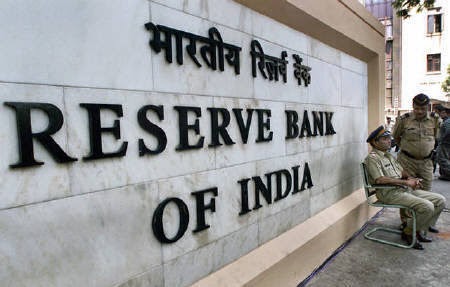
Functions of RBI:- A. The Reserve Bank of India is the central bank of India, was established on April 1, 1935 in accordance with the provisions of the Reserve Bank of India Act, 1934. The Reserve Bank of India was set up on the recommendations of the Hilton Young Commission. The commission submitted its report in the year 1926, though the bank was not set up for nine years.To regulate the issue of Bank Notes and keeping of reserves with a view to securing monetary stability in India and generally to operate the currency and credit system of the country to its advantage.” Banker to the Government: performs merchant banking function for the central and the state governments; also acts as their banker.Banker to banks: maintains banking accounts of all scheduled banks

SEBI–SECURITIESAND EXCHANGE BOARD OF INDIA:- SEBI is a capital market regulator means all the capital transactions are governed by sebi its major functions are, protecting the interest of investor in securities market, promoting development of securities market, regulating the securities market……

IRDA—INSURANCE REGULATORY DEVELOPMENT AUTHORITY:- IRDA is the regulatory authority of insurance business its functions are protecting interest of policy holders,specifying proper training,qualification etc to insurance people, levying fees ,commission etc for conducting insurance business, specifying the manner in which insurance company maintain their books of accounts, specifying margin of solvency, specifying general and life insurance business which company can take.

The Securities and Exchange Board of India (SEBI)

1
SEBI
SEBI

The Securities and Exchange Board of India (SEBI)

The Securities and Exchange Board of India (SEBI) is the regulator for the securities market in India. It was established in the year 1988 and given statutory powers on 12 April 1992 through the SEBI Act, 1992.

It was officially established by The Government of India in the year 1988 and given statutory powers in 1992 with SEBI Act 1992 being passed by the Indian Parliament. SEBI has its Headquarters in the business district of Bandra Kurla Complex in Mumbai and has Northern, Eastern, Southern and Western Regional Offices in New Delhi, Kolkata, Chennai and Ahmedabad respectively.

Controller of Capital Issues was the regulatory authority before SEBI came into existence; it derived authority from the Capital Issues (Control) Act, 1947.

The SEBI is managed by its members, which consists of following: The chairman who is nominated by Union Government of India. Two members, i.e. Officers from Union Finance Ministry. One member from The Reserve Bank of India. The remaining 5 members are nominated by Union Government of India, out of them at least 3 shall be whole-time members.

Upendra Kumar Sinha was appointed chairman on 18 February 2011 replacing C. B. Bhave

The Preamble of the Securities and Exchange Board of India describes the basic functions of the Securities and Exchange Board of India as “…to protect the interests of investors in securities and to promote the development of, and to regulate the securities market and for matters connected therewith or incidental thereto”.

SEBI has to be responsive to the needs of three groups, which constitute the market: the issuers of securities, the investors, the market intermediaries.

SEBI has three functions rolled into one body: quasi-legislative, quasi-judicial and quasi-executive. It drafts regulations in its legislative capacity, it conducts investigation and enforcement action in its executive function and it passes rulings and orders in its judicial capacity. Though this makes it very powerful, there is an appeal process to create accountability. A second appeal lies directly to the Supreme Court.

There is a Securities Appellate Tribunal (SAT) which is a three-member tribunal and is presently headed by Mr. Justice J P Devadhar, a former judge of the Bombay High Court.

SEBI has been active in setting up the regulations as required under law. SEBI did away with physical certificates that were prone to postal delays, theft and forgery, apart from making the settlement process slow and cumbersome by passing Depositories Act, 1996.

SEBI has also been instrumental in taking quick and effective steps in light of the global meltdown and the Satyam fiasco. In October 2011, it increased the extent and quantity of disclosures to be made by Indian corporate promoters. In light of the global meltdown, it liberalized the takeover code to facilitate investments by removing regulatory structures.

EVERYDAY SCIENCE

3
everyday science

Q. Why is fire extinguished by sodium bicarbonate?

A. Sodium bicarbonate decomposes on heating to produce carbon dioxide gas. The gas is neither combustible nor a supporter of combustion, so it extinguishes the fire quickly.

Q. What are Gamma Rays?

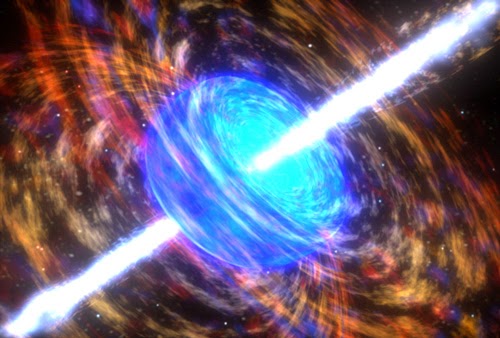
A. These are short-wave electro-magnetic radiations similar to light and X- rays. The penetrating power of these rays is extremely high, even greater than X- rays. They can penetrate through 6 inches of steel. Gamma rays are not deflected by strong electric or magnetic fields. However, these are harmful to living tissues.

Q. What is a liquid?

A. It is a state of matter intermediate between a gas and a solid. A liquid may be considered as a condensed gas or a molten solid. The molecules are rigidly fixed in a solid and, therefore, it has a definite shape as well as volume. The molecules are free to move in a gas and, therefore, it has neither a definite volume nor a definite shape. The molecules are relatively free to move in a liquid, but this freedom is much more restricted on account of cohesive forces. A liquid, therefore, has a definite volume, but no definite shape. A liquid takes the shape of the vessel in which it is poured. It is only slightly compressible.

Bureau of Indian Standards (BIS)

4
BIS
BIS

Bureau of Indian Standards (BIS)

The Bureau of Indian Standards (BIS) is the national Standards Body of India working under the aegis of Ministry of Consumer Affairs, Food & Public Distribution, and Government of India. It is established by the Bureau of Indian Standards Act, 1986 which came into effect on 23 December 1986. The Minister in charge of the Ministry or Department having administrative control of the BIS is ex-officio President (Emaad Amin) of the BIS.

The organization was formerly the Indian Standards Institution (ISI), set up under the Resolution of the then Department of Industries and Supplies, dated 3 September 1946. The ISI was registered under the Societies Registration Act, 1860.

Read Also: Environmental Jurisprudence

The Bureau is a Body Corporate consisting of 25 members representing both Central and State Governments, industry, scientific and research institutions, and consumer organizations. Its headquarters are in New Delhi, with regional offices in Kolkata, Chennai, Mumbai, Chandigarh and Delhi and 20 branch offices.

BIS is a founder member of International Organisation for Standardization (ISO). It represents India in ISO, the International Electrotechnical Commission (IEC) and the World Standards Service Network (WSSN).

The BIS product Certification Scheme is one of the largest in the world. It is in existence for more than 58 years. ISI mark on their product, which is synonymous with quality products. BIS also operates Foreign Manufacturers Certification Scheme under which overseas manufacturers can be granted the licence to use the BIS Standard Mark.

One of the major functions of the Bureau is the formulation, recognition and promotion of the Indian Standards. As on 31 August 2013, Standards formulated by BIS, are in force. These cover important segments of an economy, which help the industry in upgrading the quality of their products and services.

Certification Schemes based on the categorization of products in terms of risk to health; safety; environment; products from small scale to large scale industry; maturity of an industry as a whole for the product etc. have been introduced.

Must Read: PM Urged to Revamp Medical Council of India (MCI)

Objectives

  • Harmonious development of standardization, marking and quality certification
  • To provide new thrust to standardization and quality control
  • To evolve a national strategy for according recognition to standards and integrating them with growth and development of production and exports

An I – Care Programme has been launched at the national level for effectively engaging with all stakeholders especially consumers, industry, and market. I – Care Programme also aims at enhancing interaction with industries to solve their problem and encourage them to come forward to take a licence from BIS.

Must Read:

ISRO successfully launches third navigation satellite IRNSS 1C