Home Blog Page 608

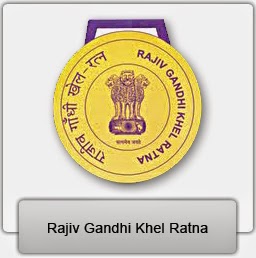
RAJIV GANDHI KHEL RATNA AWARD WINNERS

0

1991–92 —Viswanathan Anand (Chess)

1992–93— Geet Sethi (Billiards)

1993–94 —Not Conferred

1994–95— Cdr. Homi D. Motivala & Lt. Cdr. P. K. Garg (Yachting)


1995–96— Karnam Malleswari(Weightlifting)

1996–97— Nameirakpam Kunjarani(Weightlifting),Leander Paes (Tennis)

1997–98— Sachin Tendulkar(Cricket)

1998–99— Jyotirmoyee Sikdar(Athletics)

1999–2000— Dhanraj Pillay (Hockey)

2000–01— Pullela Gopichand(Badminton)

2001–02— Abhinav Bindra(Shooting)

2002–03— Anjali Ved Pathak Bhagwat(Shooting), K. M. Beenamol (Athletics)

2003–04— Anju Bobby George(Athletics)

2004–05— Lt. Col Rajyavardhan Singh Rathore(Shooting)

2005–06— Pankaj Advani (Billiards and Snooker)

2006–07— Manavjit Singh Sandhu (Shooting)

2007–08— Mahendra Singh Dhoni (Cricket)

2008–09— Mary Kom (Boxing),Vijender Singh (Boxing),Sushil Kumar (Wrestling)

2009–10— Saina Nehwal (Badminton)

2010–11— Gagan Narang (Shooting)

2011–12— Vijay Kumar (Shooting), Yogeshwar Dutt (Wrestling)

2012–13— Ronjan Sodhi (Shooting)

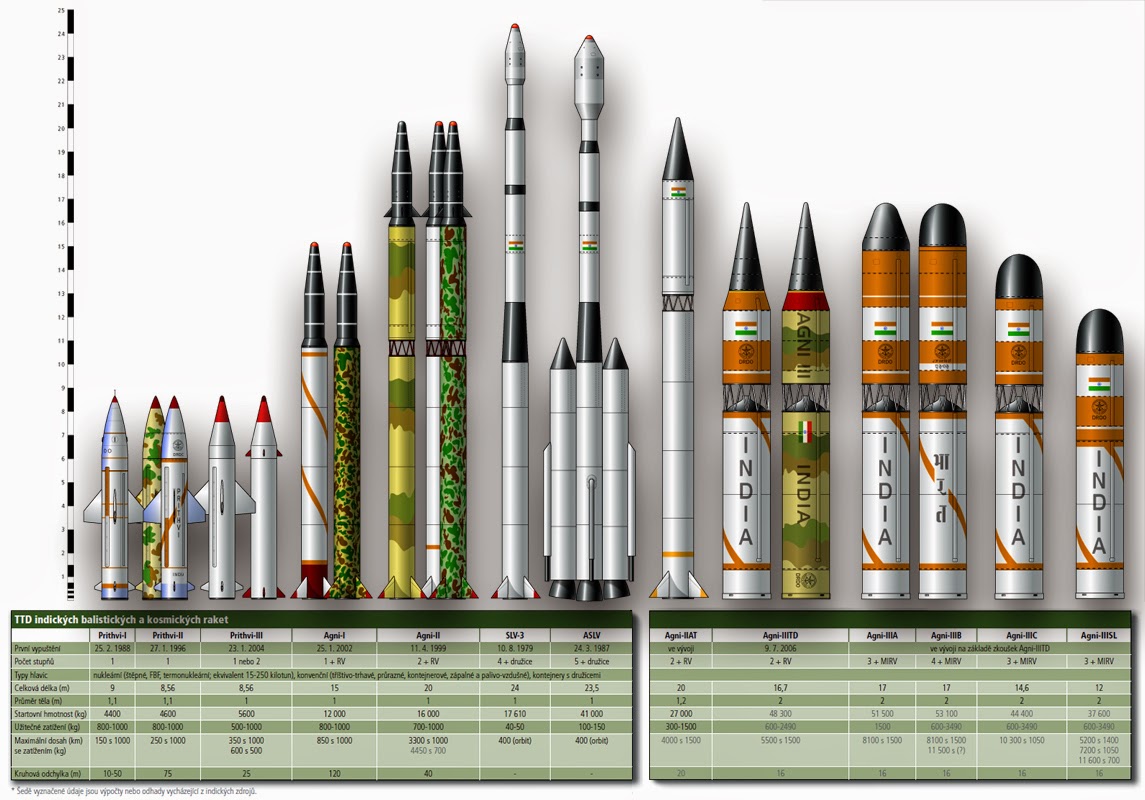
List of Indian Missiles

3
List of Indian Missiles :-


1. Prithvi-I (SS-150)(Range: 150 km, Payload: 1000 kg, User: Army)

2. Prithvi-II (SS-250)(Range: 250 km – 350 km, Payload: 500 kg – 1000 kg, User: Air Force, Army)

3. Prithvi-III (SS-350)(Range: 350 km – 600 km, Payload: 250 kg – 500 kg, User: Army, Air Force, Navy)

4. Agni-I(Range: 700 – 1,200 km, Type: MRBM, User: Army, Air Force)

5. Agni-II(Range: 2,000 – 2,500 km, Type: IRBM, User: Army, Air Force)

6. Agni-III(Range: 3,000 – 5,000 km, Type: IRBM, User: Army, Air Force)

7. Agni-IV(Range: 2,500 – 3,700 km, Type: IRBM, User: Army, Air Force)

8. Agni-V(Range: 5,000 – 8,000 km, Type: ICBM, User: Army, Air Force)

9. Agni-VI(Range: 8,000 – 10,000 km, Type: ICBM, User: Army, Air Force)

10. K-15(Range: 750 km, Weight: 10 tonne, Warhead: 1 tonne, length: 10 m)

11. K-4(Range: 3,500-5,000 km, Weight: 17 tonnes, Warhead: 1 tonne – 2.5 tonnes, length: 10 m)

12. K-5(Range: 6,000 km, Weight: Unspecified, Warhead: 1 tonne, length: Unspecified)

13. BrahMos(Type: Supersonic, Range: 290 km, Status: Inducted)

14. Shaurya (Type: Hypersonic, Range: 1000-1800 Km, Status: Inducted)

15. SRSAM (Type: Hypersonic, Range: 15 Km, Status: Inducted)

16. Pinaka (Range: 40 km, Status: Inducted)

17. Nag (Range: 4km, Status: Induction)

18. Akash (Range: 30 Km , Status: Inducted)

19. Phase-I:(Status: Development completed)

20. MRSAM(Range: 70 km, Used: Air force)

Some other Indian Missiles that are either in development phase or in testing phase are :

1. BrahMos-2(Type: Hypersonic, Range: 290 km, Status: In development)

2. Long-Range Cruise Missile (LRCM) (Type: Supersonic, Range: 1000 km, Status: In development)

3. Pinaka 2 (Range: 120 km, Status: Design Phase)

4. Nag 2(Range: 7 km, Status: In development)

5. Akash MK2(Range: 45 -50 KM, Status: In development)

6. Astra missile Mk2(Range: 100-120 km, Status: Design Phase)

7. Phase-II(Status: In design Phase)

8. Prahaar(Range: 150 KM, Status: In Test Phase)

9. Astra(Range: 80 km, Status: In Trail Phase)

10. Helina(Range: 7Km, Status: In Test Phase)

11. LRSAM (Range: 70 Km, Status: testing phase)

12. Trishul (Range: 8-12 Km, Status: Closed)

General knowledge questions

0

1. The study of Bones is called?
Answer: Osteology

2. Cells of bone is called?
Answer: Osteocytes

3. Cells of cartilage is called?
Answer: Chondrocytes

4. The total number of bones in an Adult human body?
Answer: 206

5. The number of ribs in the human body?
Answer: 24

6. The face of a man is made up of?
Answer: 14 bones

7. A number of bones in spinal column?
Answer: 33

8. A number of bones in Ear?
Answer: 3

9. Which is the longest bone?
Answer: Femur

10. Which is the smallest bone?
Answer: Stapes

11. Breast bone?
Answer: Sternum

12. Total number of muscles?
Answer: 639

13. Study of body movements?
Answer: Kinesiology

14. Strongest muscles?
Answer: Jaw muscles

15. Largest muscles?
Answer: Gluteus maximus

16. Smallest muscles?
Answer: Stapedius

17. The breaking of a bone is known as?
Answer: Fracture

GK For Various Entrance Examination

0

1. In order of their distances from the Sun, which of the following planets lie between
Mars and Uranus?
(a) Earth and Jupiter
(b) Jupiter and Saturn
(c) Saturn and Earth
(d) Saturn and Neptune
Answer. (b)

2. Comets revolve around:
(a) Sun
(b) Earth
(c) Venus
(d) No single heavenly body
Answer. (a)

3. Which one of the following is correct? Great Bear is a
(a) Galaxy
(b) Planet
(c) Star
(d) Constellation
Answer. (d)

4. The hottest planet is:
(a) Mercury
(b) Venus
(c) Jupiter
(d) Saturn
Answer. (b)

5. Which of the planets is nearest to the earth?
(a) Jupiter
(b) Venus
(c) Mercury
(d) Mars
Answer. (b)

6. Which one of the following planets takes the same number of days
for rotation And revolution?
(a) Mars
(b) Venus
(c) Mercury
(d) Jupiter
Answer. (b)

7. Which of the following planets of the solar system has the longest day?
(a) Mercury
(b) Jupiter
(c) Venus
(d) Earth
Answer. (c)

8. Which planet of the solar system spins on its axis at the fastest rate?
(a) Mercury
(b) Earth
(c) Jupiter
(d) Satum
Answer. (c)

7. Which planet looks reddish in the night sky?
(a) Mercury
(b) Mars
(c) Jupiter
(d) Saturn
Answer. (b)

8. Which of the following is the largest of the inner planets?
(a) Venus
(b) Mercury
(c) Mars
(d) Earth
Answer. (d)

9. A black hole is a:
(a) Contracted star with intense gravitational pull
(b) Star with very low surface temperature
(c) Star with no atmosphere
(d) Pulsating star
Answer. (a)

10. Asteroids have their orbits between the planets:
(a) Mercury and Venus
(b) Earth and Mars
(c) Mars and Jupiter
(d) Jupiter and Saturn
Answer. (c)

11. The orbits of planets around the Sun, or of satellites around the Earth, can be:
(a) Circular and elliptic
(b) Circular and hyperbolic
(c) Elliptic and parabolic
(d) Parabolic and hyperbolic
Answer. (a)

12. NASA’s Deep Impact space mission was employed to take detailed pictures of which comet nucleus?
(a) Halley’s Comet
(b) Hale-Bopp
(c) Hyakutake
(d) Temple
Answer. (d)

13. Foucault experiment is proof of which one of the following?
(a) Revolution of Earth
(b) Rotation of Earth
(c) Rotation of Moon
(d) Revolution of Moon
Answer. (b)

14. The earth rotates around its axis from:
(a) North to south
(b) East to west
(c) South to north
(d) West to east
Answer. (d)

15. “Mohs’ Scale” is used to indicate the:
(a) Degree of brittleness of a substance
(b) Degree of hardness of minerals.
(c) Degree of viscosity of a liquid
(d) Degree of elasticity of a material
Answer. (b)