Home Blog Page 627

Important Officials in India 2013

0
  1. Dr. Manmohan Singh: Chairman, Planning Commission.
  2. Ms. Meira Kumar: Speaker, Lok Sabha.
  3. Mohammad Hamid Ansari: Chairman, Rajya Sabha.
  4. Mr. P. J. Kurien: Deputy Chairman, Rajya Sabha.
  5. Mr. Karia Munda: Deputy Speaker, Lok Sabha.
  6. Mrs. Sushma Swaraj : Leader of Opposition (Lok Sabha).
  7. Mr. Arun Jaitley: Leader of Opposition (Rajya Sabha).
  8. Dr. Montek Singh Ahluwalia: Deputy Chairman, Planning Commission.
  9. Mr. V. S. Sampath: Chief Election Commissioner
  10. Mr. Harishankar Brahma: Election Commissioner.
  11. Syed Nasim Zaidi: Election Commissioner.
  12. Mr. Shashi Kant Sharma: Comptroller and Auditor-Generalof India
  13. Mr. Justice K. G. Balakrishnan: Chairperson, National Human Right Commission (NHRC)
  14. Mr. K. M. Chandrasekhar: Cabinet Secretary.
  15. Mr. T. K. A. Nair: Principal Secretary to Prime Minister .
  16. Mr. Justice M. N. Rao: Chairman, National Commission for Backward Classes.
  17. Ms. Shanta Sinha: Chairperson, National Commission for Protection of Child Rights
  18. Dr. Buta Singh: Chairman, National Commission for Scheduled Castes
  19. Ms. Urmila Singh: Chairman, National Commission for Scheduled Tribes.
  20. Prof. D. P. Agrawal: Chairman, UPSC.
  21. Dr. M. S. Swaminathan : Chairman, National Commission on Farmers (NCF).
  22. Mr. Shiv Shankar Menon: National Security Adviser and Special Adviser to PM (Internal Security).
  23. Mr. S. C. Sinha : Director-General, National Investigation Agency (NIA).
  24. Mr. Vinay Mittal: Chairman, Railway Board.
  25. Mr. Shumsher K. Sheriff : Secretary-General, Rajya Sabha.
  26. Mr. T. K. Viswanathan : Secretary-General, Lok Sabha.
  27. Mr. Syed Asif Ibrahim : Director, IB.
  28. Mr. Ranjit Sinha: Director, CBI.
  29. Mr. Alok Joshi : Director, Research and Analysis Wing (RAW).
  30. Mr. Arvind Ranjan : Director-General, NSG.
  31. Mr. Dilip Trivedi : Director-General, CRPF.
  32. Mr. Subhash Joshi : Director-General, Border Security Force (BSF).
  33. Mr. Rajiv : Director-General, Central Industrial Security Force (CISF).
  34. Mr. P. K. Mehta: Director-General, Railway Protection Force. (RPF).
  35. Mr. Ajay Chadha: Director-General, Indo-Tibetan Border Police (ITBP).
  36. Mr. Arun Chaudhary : Director-General, Sashastra Seema Bal.
  37. Vice-Admiral Anurag G. Thapliyal : Director-General, Indian Coast Guard.
  38. Lt. Gen. Avtar Singh: Director-General, Defence Intelligence Agency.

Female Chief Ministers of India

0

List of female Indian Chief Ministers:

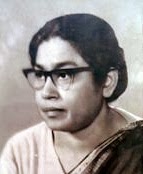
1. Sucheta Kriplani (INC) — U.P. —2 October 1963 – 13 March 1967

2. Nandini Satpathy (INC) — Orissa—14 June 1972 – 3 March 1973, 6 March 1974 – 16 December 1976

3. Shashikala Kakodkar (MGP) — Goa-12 August 1973 – 27 April 1979

4. Syeda Anwara Taimur (INC) — Assam— 6 December 1980 – 30 June 1981

5. Janaki Ramachandran (AIADMK) — Tamil Nadu —7–30 January 1988

6. J. Jayalalithaa — Tamil Nadu—24 June 1991 – 12 May 1996, 14 May 2001 – 21 September 2001, 2 March 2002 – 12 May 2006, 16 May 2011 – 27 September 2014, 23 May 2015 – 5 December 2016

7. Mayawati (BSP) — U.P. —13 June 1995 – 18 October 1995, 21 March 1997 – 21 September 1997,3 May 2002 – 29 August 2003, 13 May 2007 – 7 March 2012

8. Rajinder Kaur Bhattal (INC) — Punjab—21 January 1996 – 12 February 1997

9. Rabri Devi (RJD) — Bihar—25 July 1997 – 11 February 1999, 9 March 1999 – 2 March 2000, 11 March 2000 – 6 March 2005

10. Sushma Swaraj (BJP) — Delhi—13 October 1998 – 3 December 1998

11. Shila Dixit (INC) 1998 — 8 Dec 2013

12. Uma Bharati (BJP) — M.P. — 8 December 2003 – 23 August 2004

13. Vasundhara Raje (BJP) — Rajasthan — 8 December 2003 – 11 December 2008 — from Dec  2013 — Present

14. Mamata Banerjee (TMC) — West Bengal—20 May 2011 – present

15. Anandiben Patel (BJP) — Gujarat — 22 May 2014 — 7 August 2016

16. Mehbooba Mufti Sayeed (PDP) — Jammu and Kashmir — 4 April 2016 — Present

Highlights of Census 2011

0
  • The population of India has increased by more than 181 million during the decade 2001-11.
  • Percentage of growth in 2001-11 is 17.64; males 17.19 and female 18.12
  • 2001-2011 is the first decade (with the exception of 1911-21) which has actually added lesser population compared to the previous decade.
  • Uttar Pradesh (199.5 million) is the most populous State of the country followed by Maharashtra.
  • The percentage decadal growth growth rates of the most populous States have declined during  2001-2011 compared to 1991-2001.
    1. Uttar Pradesh (25% to 20.09%)
    2. Maharashtra (22.73% to 15.99%)
    3. Bihar (28.62% to 25.07%)
  • During 2001-2011, as many as 25 States/UTs with a share of about 85% of the country’s population registered and annual growth rate of less than 2% as compared to, 15 States/UTs with a share of about 42% during the period 1991-2001.
  • The total number of children n the age-group 0-6 is 158.8 million (5 million since 2001).
  • Uttar Pradesh (29.7 million), Bihar (18.6 million), Maharashtra (12.8 million), Madhya Pradesh (10.5 million) and Rajasthan (10.5 million) constitute 52% children in the age group of 0-6 years.
  • In Census 2011, population of children in the age group 0-6 years registered negative  percentage growth (-)3.08% growth with minus (-)2.42 for males and (-)3.80 for females.
  • In Census 2011, the proportion of Child Population in the age group of 0-6 years to total population is 13.1 percent while the corresponding  figure in 2001 was 15.9 percent. The decline has been to the extent of 2.8 points.
  • Overall sex ratio at the national level has increased by 7 points to reach 940  at Census 2011 as against 933 in Census 2001. This is the highest sex ratio recorded since Census 1971 and a shade lower than 1961. Increase in sex ratio is observed in 29 States/UTs.
  • Three major States (J&K, Bihar and Gujarat) have shown decline in sex ratio as compared to Census 2001.
  • Kerala with 1984 has highest sex ratio followed by Puducherry with 1038,  Daman and Diu has the lowest sex ratio 618.
  • Child sex ratio of children aged between 0 to 6 years is 914 (national). Increasing trend in the child sex ratio seen in Punjab, Haryana, Himachal Pradesh, Gujarat, Tamil Nadu, Mizoram, and Andaman and Nicobar Island in all remaining 27 States/UTs, the child sex ratio show decline over Census 2001.

Solar System: Some Important Facts

2
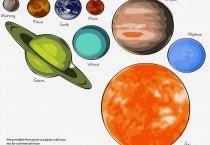
Biggest Planet: Jupiter
Smallest Planet: Mercury
Largest Planet to Sun: Mercury
Farthest Planet from Sun: Neptune
Largest Planet to Earth: Venus
Brightest Planet: Venus
Hottest Planet: Venus
Coldest Planet: Neptune
Red Planet: Mars
Biggest Satellite: Ganymede
Smallest Satellite: Deimos
Blue Planet: Earth
Morning Star: Venus
Evening Star: Venus
Planet with Red Spot: Jupiter
Brightest planet outside Solar System: Sirius (Dog Star)
Closest Star of Solar System: Proxima Centauri
Fastest rotation in Solar System: Jupiter
Slowest rotation in Solar System: Venus
Fastest revolution in Solar System: Mercury
Slowest revolution in Solar System: Neptune

Scientific Instruments

0

Altimeter is a special type of aneroid barometer, used in measuring altitudes.

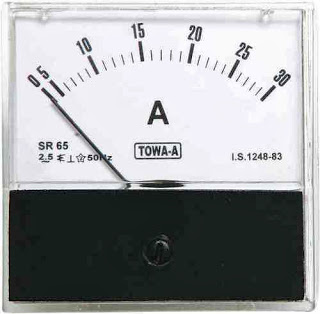
Ammeter is an instrument to measure the strength of an electric current.

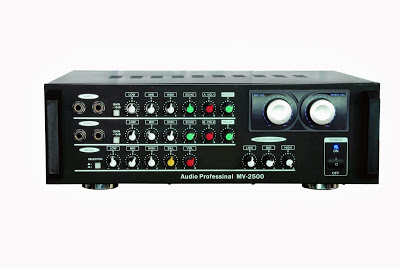
Amplifier is an electronic device that increases the strength of a signal fed into it.

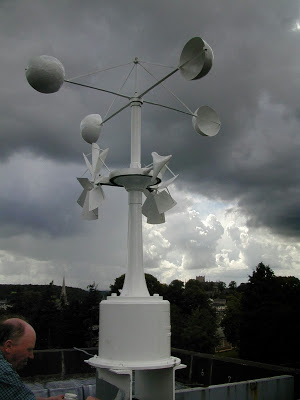
Anemometer is an instrument to measure the velocity and find the direction of the wind.

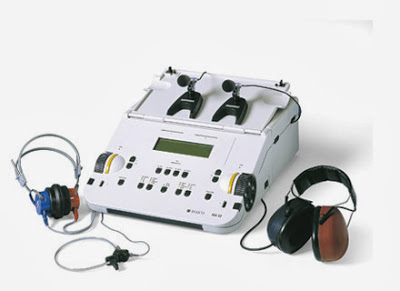
Audiometer is an instrument to measure difference in hearing.