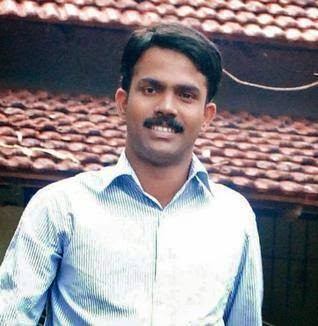
Chanchal Rana ranked AIR-7th in the country by clearing the Union Public Service Commission (UPSC) Civil Service Examination-2013.
Gaurav Agrawal of Jaipur was the national topper while Munish Sharma and Akshay Tripathi secured second and third position respectively. There were three women in the top 10. They are, Bharti Dixit (5), Sakshi Sawhney (6) and Medha Roopam (10).
Marks Obtained
|
Total Marks |
Marks Obtained |
| Total (Written) |
2000 |
865 |
| Interview |
300 |
222 |
| Total |
2300 |
1087 (47.26%) |
Family Background
Chanchal Rana comes from NALCO Nagar in Angul district, Odisha. His father Anil Kant Rana works with NALCO and mother Banajyotsna is a homemaker. The family originally hails from West Medinapore district of West Bengal. Chanchal Rana got married to Swadha Dev IAS (2014 batch).
Educational Background
Chanchal Rana is an alumnus of NIT Silchar as he did B Tech in Electrical Engineering. Rana had worked for Indian Oil Corporation and was in Barauni Refinery from 2010-2013. He left his job only to join IPS after his selection.
Chanchal Rana said, “he have tremendous loyalty for his parents and he was fortunate, to get job immediately after completing Engineering from NIT; that more or less fulfilled his parent’s wish as he got selected in Indian Oil Corporation”.
Optional Paper
Chanchal Rana opted Geography as his optional paper as its logical and rational and Good for engineers like him. It is heavily covered directly in GS Paper-1 and also indirectly in many areas of GS Paper-3. Helps a great deal in interview also.
Must Read: Success Story of Pamela Satpathy, IAS of 2014
Attempts
In third attempt Chanchal Rana has cracked the most prestigious Civil Services Examination 2013 by achieving top rank in the meritlist.
In his first attempt, Chanchal faced interview, but couldn’t find name in meritlist. In second attempt, he secured AIR 219 that got him Indian Police Service (IPS). Not satisfied with the attainment, he continued his efforts to improve and his third attempt helped him to improve his rank that ensures the post of Indian Administrative Service (IAS).
Chanchal Rana said, “IAS officers are more directly connected with people and in development process of the nation. With that belief, he had reappeared the test”.
Preparation Strategy
Chanchal disclosed his strategy. He used to study despite he was in service at Public Sector by undertaking job and it was not that tough to get time for preparation. He maintained punctuality in his preparation and he started preparation for examination with daily 5 hours study schedule.
While exchanging views about ‘Civil Services’ as career destination, Chanchal Rana said “Two factors prompted him to join first, parental resistance and second, preparation itself”.
His parents suggested not to try for Civil Services Examination as they wanted him to pursue MBA so that he can get openings in new age careers. With choice wide open, he can have instant career opportunities in other areas. They resisted not because it is tough but, apprehended that it may take lot of time.
Second factor is more exciting as the Civil Services Examination preparation gives you chance to learn and improve your awareness level so much that you can be successful in any sphere of life.
Read Also: Topper’s Story – Varun Ranjan IAS, 2013
UPSC Interview of Chanchal Rana
Chanchal Rana: May I come in sir?
PK Mishra: Yes, please. (the rest were frozen mortals & behaved like a differently abled deaf person; did not even notice my presence)
Chanchal Rana: Good afternoon, Madam. (Madam shocked & wishes back). Good afternoon Sirs.
PK Mishra: Good afternoon, please take your seat.
Chanchal Rana: Thank You Sir.
PKM: So, Mr. Chanchal Rana. You belong to Angul, Orissa? Do you indeed belong to Odisha?
Chanchal Rana: Sir, I am a Bengali & belong to West Midnapur district of West Bengal. But I am born and brought up in Odisha.
PKM: ok, that’s a border area. Chanchal it seems you were the general secretary of your college students union body. Were you a part of any strike? Did you lead any?
Chanchal Rana: Fortunately, there were no strikes sir.
PKM: was there no requirement of strikes in your college. In case there was one, would you have led them?
Chanchal Rana: Sir, our institute had a number of forums where we could have represented the grievances of the students & get them redressed. For example at the warden, HOD or at the senate level. In the worst of the scenario if the grievance still persisted, then a strike could have been led by the team, but it would have definitely been a peaceful one.
PKM: are you aware of any commissions on students body elections like the LYNGDOH committee reforms?
Chanchal Rana: (after a brief pause) sorry sir, I have not heard of such a committee.
PKM: OK. Do you know a sub division of Angul named Athmallik? Have you ever visited the place?
Chanchal Rana: yes, Sir it’s a sub division in the southern portion of Angul district but I have not visited that place.
PKM: Was angul a district from the beginning?
Chanchal Rana: No sir. It was initially a district just after Orissa was formed. Subsequently, it was a part of Dhenkanal sub division. On April 1 st , 1993 it was shelved off from Dhenkanal as a separate district.
PKM: Have you been to Deulajhari? It’s a hot water spring.
Chanchal Rana: Sorry sir, its in Angul but I have not visited the place yet.
PKM: What according to you are 2 greatest problem faced by Odisha? What are the suggestions to contain them?
Chanchal Rana: According to me, the first one is the recurrent devastation caused by the natural disasters, i.e. floods, cyclones, droughts. The solution to them is the in spirit implementation of the recommendations of the national disaster management act 2005, for eg. Wrt early warning systems, integration of the developmental plans with the disaster management plans eg- building laws, proper communication systems & related mitigation, preparedness, rescue, response & recovery measures. The most important remedy is to arm those who are closes to the disaster, i.e. the community itself. This can be done through disaster related education at the school level as well as specifically mentioning the responsibility of the panchayati raj institutions.
PKM: (interrupts) don’t you think disaster related education is already being imparted at the school level?
Chanchal Rana: Yes sir, I do agree with your claim. But I meant the practical aspect especially the mock drills that should have been conducted and especially the inclusion of the vulnerable groups such as the disabled.
PKM: OK. Ok. What about the second problem?
Chanchal Rana: the second problem is wrt the underdeveloped tribal areas & the growing menace of naxalism.
PKM: which are those areas?
Chanchal Rana: the 4 southern districts of Nawarangpur, Koraput, Raygada & Malkangiri plus those bordering Chattisgarh, Jharkhand & W. Benagl like Mayurbhanj & Sundargarh & Jajpur area.
PKM: and what could be the solutions?
Chanchal Rana: the first one is to treat them as a law & order problem & beef up our policing actions along with robust interstate coordination. However to make the solution sustainable, it must be amalgamated with developmental efforts in such remote pockets to frustrate the backing of the poor tribals caught in a crossfire. Implementation of steps like that of Saranda Action plan could be one such example.
PKM passes it to the 1 st member:
M1: Chanchal, how long have you been working with Indian Oil Corporation now as well?
Chanchal Rana: for the past 2.5 years sir.
M1: have you heard of FORTUNE 500 companies. What is Fortune 500?
Chanchal Rana: Sir, it’s a western magazine that uses a descriptive criteria of its own to judge the worthiness & performance of a company. It comes out with a list of 500 of them. Indian Oil ranks 83 rd in that.
M1: what all indian companies figure in the list. (pause for a while) currently how many of them?
Chanchal Rana: Sir I am not very sure, but its 8 of them.
M1: Could you name some of them?
Chanchal Rana: Sir, reliance industries, tata steel, ONGC… I paused to recollect some of the remaining. Sorry sir, I am not able to recollect the rest if them.
M1: are there any banking companies in that list?
Chanchal Rana: Yes sir, SBI does figure in the list.
M1: can you name some of the companies in the PSUs in the oil sector?
Chanchal Rana: Sir, ONGC, OIL, HPCL, BPCL, IOCL.
M1: what was the basis for the creation of these companies?
Chanchal Rana: sir, when they were initially established, they looked into specific segments of the oil industry. While ONGC & OIL looked into the E & P activities, IOCL diversified itself from marketing & transportation to refining facilities, the remaining were already into the refining business. As of now they have truly diversified themshelves like IOCL which is into E & P activities, & petrochemical sector apart from refining, marketing & pipeline sector.
Read Also: UPSC Interview of Gitanjali Brandon, IFS Rank 6
M1: name some group companies of IOCl?
Chanchal Rana: Sir, there are 5-6 of them. IOCL Mauritius, IOC FZE, IOC SL, IOC-CREDA . since I could not remember the last one, I admitted that there was another one as which I filed to recall.
M1: do you think india can be ever be self sufficient wrt oil requirement?
Chanchal Rana: the issue whether india will be self sufficient depends on 2 factors: the extent to which we will be able to explore & successfully exploit the current & future oil reserves & the second is the degree to which we are able to diversify our energy needs, thereby migrating to alternative forms of energy & reducing our oil consumption. Technological progression is at a very fast pace & what was unthinkable a few years back are commercial now. E.g: shale gas. But as of now where we are importing 78% of our oil requirements from abroad, I can just hope that we will be self sufficient in the future.
Member 1 PASSES ON TO Member 2.
M2: you are an electrical engineer?
Chanchal Rana: (probably he wanted to prove that I had obtained a fake engineering certificate) Yes, sir.
M2: tell me how do we charge a mobile?
Chanchal Rana: (I was just about to utter the word ‘charger’ but lest it creates an unusual scene for them I requested the member to elaborate the question- he was referring to the circuitry of a charger)Sir, it consists of an inductance similar to a miniaturised version of a transformer to step down the voltage & then the output is rectified via a diode circuit followed by some resistances to limit the current.
M2: which type of battery is used in cell phones?
Chanchal Rana: sir, lithium ion type of cells.
M2: What would happen if we overcharge the cells? What would be current drawn then?
Chanchal Rana: sir, a series of chemical reactions occur inside a cell which results in some by products generated continuously. In case, we overcharge the battery some gases are produced which needs re-consumption or venting & hence it heats up. This also leads to reduction in the life of the battery as well. The current drawn becomes almost zero when its fully charged.
M2: have you heard of Qwerty?
Chanchal Rana: Sir, it’s a type of keyboard design.
M2: why is the name qwerty so frequently used?
Chanchal Rana: sir it derives the name from the first 6 alphabets in the front row in the keys arrangement.
M2: right. In how many ways can you write “and” in computer or in cell phones? (points out to a pencil & paper).
Chanchal Rana: I wrote 4 ways “AND”, “and”, & n (we usually use it in SMS language)
M2: what is the Roman significance of & in this?
Chanchal Rana :& is for AMPERSAND. sorry sir, I am not aware of the roman significance.
M2: what are different symbols that appears in the number row along with the exclamation marks?
Chanchal Rana: I started with @, #, $, * and then could not recollect the rest.
M2: he asked me if brackets were also there?
Chanchal Rana: yes sir, it does have parenthesis.
M2: I went to Orissa once & I could see some negroes there. They have been there for long & have also been accorded the tribal status as of now. This is a fact. How could the negroes appear in Orissa?
Chanchal Rana: sir, one of the reasons could be in the history of Orissa. Sir, in the past, Kalinga had very good trade relations with Bali, Indonesia,Tanzania & other African countries. It might have been possible that exchange of the goods & people took place & hence some of the present STs owe their ancestry to these negroes.
(PKM interrupts & says yes, they were the slaves that were brought from other countries with whom we had good trade relations, I said thank you sir)
M2: in which era did these events take place?
Chanchal Rana: sir, it was the King kharavela era (I made a wild guess, & I was cursing myself for having done that)
M2: yes, and it was in which period?
Chanchal Rana: sir, it was between 3 rd & 4 th century.
M3: the govt of Kazakhstan is planning to cooperate with india to extract oil from a particular type of soil in barauni. What is that type of soil in assam?
Chanchal Rana: (I thought he had mistaken barauni to be in assam, but then I decided it would be fatal to correct him. Anyways I had no idea of what type of soil and I was thinking of saying tar sands like the one in Canada) I said sorry sir, I do not know what type of soil I was being referred to.
Member 2 passes on to Member 3:
M3: I don’t see much of the tourism infrastructure along the coast of Orissa. Why are the beaches not that developed there?
Chanchal Rana: sir, Orissa has quite a good number of beaches developed although they are not contiguous geographically. Some of the developed ones are the chandbali beach, chandipur beach, puri beach & beaches near the chilika region. However the infrastructure is not as developed if we compare it with that of goa. Some of the beaches like gahirmatha have been kept out of the tourists to ensure protection to the olive ridley turtles; a long stretch has been earmarked for DRDO missile firing applications & some stretches has been used for the construction of ports such as Paradeep & Dhamra. It because of these commitments that tourism infrastructure has not been much developed along the beaches.
M3: barauni has been affected many a times with a disaster, what is it?
Chanchal Rana: sir, floods.(he asks why?) This is because of the lower stretch of the river ganga which carries a lot of sediments. + frequent flooding of the Kosi river + encroachments along the river bank + sand mining & quarrying.
M3: have you visited south india?
Chanchal Rana: sorry sir, I haven’t. (paused for a while) except for once that I had been to kalpakkam for a national quiz.
Must Read: IAS Topper Interview : Venkat Raja
M3: what are the languages of south india?
Chanchal Rana: sir, the prominent ones are telugu, tamil, malyalam, kannada, with some areas also speaking French, Portuguese & tribals having their own languages.
M3: what is the script that they use? Do they use the devnagri here?
Chanchal Rana: sir, they use the Dravidian script (hurriedly I missed the brahmi script)
M3: does all the 4 languages have the same script?
Chanchal Rana: sorry sir, I am not aware of that.
M3: you belong to angul. Have you heard of the name angulimal? Who was he? Ok where did you hear his name from?
Chanchal Rana: sir, I first heard his name during my “balbharati” hindi textbook in class 4. (they started laughing). Sir, he was a ruthless killer.
M3: why was he known by that name.
Chanchal Rana: sir, he used to hang a garland of fingers.
M3: whose? Did he cut his own fingers?
Chanchal Rana: I answered no sir, he used to cut the fingers of those among whom he used to spread terror.
M3: he became a great devotee of some god. Who was he?
Chanchal Rana: after a brief pause, I said sorry, I had no idea to that question. (at this PKM interrupted & said that he was Lord Buddha, I thanked him for coming to my rescue once more)
M3: have you ever visited the konark temple? There could be some more tourism developments in that area.
Chanchal Rana: yes sir, I had been to konark once. (before I could have said anything, he asked when had I gone last) I said in the 8 th class.
M3: then probably you might not be aware of some of the recent changes . ok tell me who build konark?
Chanchal Rana: (thanks at least he asked this one) I said with a smile, sir, it king Langula Narasimha deva.
PKM asks Member 3 to pass onto Member 4.
M4: why do you think the tribal pockets have not that developed in odisha? What should be done then. Kerala has developed so much. Has governance failed in these areas?
Chanchal Rana: sir , sorry mam. The tribals are not represented by demanding MLAs or MPs in the assemblies or in the parliament. In the name of the conservation of their culture & tradition, they themshelves along with the govt. did not create a vision for their development. This is in addition to the rough topography of these areas. The developmental model should take the tribal leaders into confidence especially in the social sector & reinvigorate the tribal councils in the schedule V areas. No mam its not that the governance has totally failed but to some extent that true as it has not performed upto the expectations.
M4: Orissa has been ravaged by the cyclones many a times. Is not there a great scope for wind energy along the coast lines then? Why are not we investing in this sector in Orissa?
Chanchal Rana: mam, Orissa is indeed cyclone affected area but this persists for only a couple of months. For wind energy to be a viable proposition we require sites that has considerable kinetic energy year round which is not the case along the coastal Orissa. The range of kinetic energy available here is too high. Even the wind atlas developed for our country does not portray Orissa as one the viable locations. Before I could have spoken about the huge coal reserves, she moved on to next question.
M4: how do you see the HDI of Orissa?
Chanchal Rana: mam, in all the indicators Orissa has lagged behind the national indicators. The HDI of Orissa is about 0.46 compared to the national HDI of 0.554 (HDR news about india in comparison to world appeared in the newspaper that day). If we do a surgery of HDI, the life expectancy is almost 5 years less than that of india, we are better in the literacy segment but our welfare portion in terms of GNI per capita was almost half that of the national statistics. Gender inequality index is very high in Orissa, almost 57 % are poor wrt one or the other dimensions of ‘multidimensional poverty index’ & therefore inequality adjusted HDI reduces the HDI of Orissa by about 30%.
M4: what is CSR?
Chanchal Rana: mam, am I being referred to corporate social responsibility. It is a manifestation of the social face of capitalism, where industries shed out a portion of their profits in developmental work for the betterment of the society.
M4: does it play a role in the health & education development of tribal pockets in Orissa?
Chanchal Rana: yes, mam definitely. It is clearly seen from the massive social spending in the health & education sector viz. Rourkela steel plant, tata, Vedanta, Nalco etc. these sectors have always been priority sector & will always remain so where a considerable investment is done in creating hospitals, schools, providing uniforms, ambulances, regular check ups, blood donation camps etc.
M4: have you heard of Premzi?
Chanchal Rana: yes mam, he is the chief of the wipro group of industries.
M4: he is famous also for something else.
Chanchal Rana: mam, he is a great philanthropher.
M4: what is it that he has done. I mean what is he associated with?
Chanchal Rana: mam, Azim premzi foundation.
M4: what does this foundation deal with?
Chanchal Rana: mam, I am not very sure of everything that this foundation is into but education & scholarships is definitely one of them.
Back to PKM: you belong to the west midnapur district of west Bengal. Could you name the island from where the missile launching is being done?
Chanchal Rana: ( I just forgot the name of the island then) I told it’s the integrated test range in Chandipur. He said, yes chandipur is the place but what was the name of the exact island.
PKM: have you heard of wheeler’s island.
Chanchal Rana: yes sir. It’s the name of the island from where the missiles were launched.
PKM: ok chanchal. Your interview is done. Thank you. Everyone nods their head.
Chanchal Rana: Thank you mam, thank you sirs. Good day to all of you.
Don’t Miss: UPSC Topper Haritha V Kumar IAS – Inspiring story for Aspirants