
Home Blog Page 401

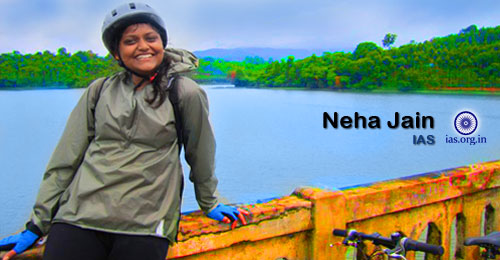
Meet IAS Neha Jain and Read Her Answers to UPSC Board

23
neha jain ias

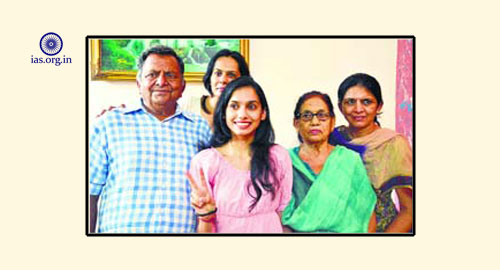
Neha Jain had cleared the India’s toughest examination by clinching All India Rank 12th in UPSC Civil Services Exam 2014 and has brought laurels to her family at the age of 26 years.

Neha Jain thought that the one life which we possess should be dedicated to the benefit of maximum people and not in selfish pursuit of money. She viewed money as a means to a greater end. With this sense of mission and wanting to pursue a path in which she could utilize her abilities to the maximum she chose to give Civil Services Examination a try. She take it as a sign that she is on the right path of her mission.

Marks Obtained by Neha Jain

 Total Marks  Marks Obtained
Total (Written)  1750 714
 Interview 275  179
 Total  2025  893 (44.10%)

Educational Background

Neha Jain was born and brought up in Kanpur. Neha completed her schooling from St. Mary’s Convent, Kanpur in 2003 from ICSE Board. She scored 92.8% in class tenth and 90% in class twelve. She pursued her B Tech in  Computer Science & Engineering from Harcourt Butler Technological Institute, Kanpur and passed out in 2009 by scoring 82.50%. She was also a Silver Medalist in her college.

She was a software engineer by profession as she served IBM India Pvt. Ltd. Banglore, for 3 years and 11 months before cracking UPSC Exam.

Must Read: UPSC Board Interview of Sakshi Sawhney IAS, Rank-6

Optional Paper

Neha Jain opted for Sociology as her optional paper.

Attempt

Neha Jain cracked UPSC Civil Services Examination in her very first attempt.

Tips for Young Aspirants

  • Make aligned target to the test series and make it a point to excel in them.
  • Practice, Practice and Practice. Its about accuracy and SPEED.

Also Read: Preparation for UPSC Interview

UPSC Board Interview of Neha Jain IAS

Neha Jain: Good Morning Ma’am, May I come in?

CM: Please come in. Take your seat

Me: Thank you ma’am.

CM: So you paint. What medium do you use?

Me: Ma’am, I use water colours.

CM: So what is unique about water colours?

Me: Ma’am, The finality of the strokes, there is no scope of a re-do, we actually paint with the coloured water. The excellence of the brush strokes is what I like the most.

CM: What is that one thing about water colors? You used to draw but you have never been able to do watercolours.

Neha Jain: Ma’am I am only able to think of the finality of the brush stroke

CM: It’s the patience required to let the paint dry.

Me: Thank you ma’am.

(Didn’t really agree with her because oil paints require much more patience, and frankly the water colours are a lot quicker. But I avoided any arguments at this stage).

CM: Do you follow Tour de France?

Me: No ma’am not much. (I knew about the Lance Armstrong story but not any further so I preferred to keep silent on this topic).

(CM points to M1 to take over)

M1: India and Pakistan have a very troubled relationship. What are the reasons you think for this?

Me: The first would be the tussle for Kashmir which is very much in news these days (A Hurriyat leader had written an open letter to the People of India for a Political solution for Kashmir) And the second would be the ceasefire violations in the past year along the Line of Control.

M1: So what is the whole issue about Jammu and Kashmir? Can you elaborate?

Me: Sir, The story goes back to the time of independence and the integration of princely states with India. Maharaja Hari Singh of Jammu and Kashmir wanted J&K to be autonomous whereas the Indian leaders wanted to integrate it within the territory of India. Also, our first Prime Minister being a Kashmiri himself had an affinity towards Kashmir. Due to Pakistani attacks on J&K, Hari Singh had to take help of the Indian forces and thus an Instrument of Accession was signed and since then we share a special relation with J&K under Article 370

M1: And what could be Pakistan’s interest in J&K?

Me: Sir, I am not sure, but I can take a guess. It’s related to the predominant Muslim population in Kashmir.

M1: Neha, you have opted for Sociology. Tell me what do we study in the discipline as such?

Neha Jain: Sir, The discipline of sociology speaks about 3 main things.

  • The interaction and influence of institutions with each other. e.g. how the institution of religion affects the institution of politics.
  • The interaction of individuals with each other and
  • The interactions of institutions with each other.

M1: Very good. Can you think of any prominent Indian sociologists?

Me: Sir M.N. Srinivas, G.S. Ghurye and Andre Beteille.

M1: Can you think of some predominant theory of M.N.Srinivas?

Me: Sir, the most prominent theory of Srinivas would be the theory of Sanskritization and Westernization.

M1: Can you explain.

Neha Jain: Sir, there are 2 hierarchies- The ritual hierarchy and the secular hierarchy. When an individual belonging to a lower position in the caste hierarchy achieves economic success, he moves up the ladder of secular hierarchy. But, in an effort to move up the ritual hierarchy, he emulates the behaviour, rituals and customs of the higher caste.

M1: Do you think the concept of Sankritization holds much importance in the contemporary world?

Me: No sir. I think in the current context people are content with climbing the secular hierarchy. And also with the concept of vote bank politics and reservations, Sanskritization is not as relevant today.

Don’t Miss: UPSC Interview of Gitanjali Brandon, IFS Rank 6

(Member 2 now asks his questions after the CM passes over the baton to him)

M2: What is Buddhist view on God?

Me: Sir, Buddhism neither accepts nor rejects the existence of God. The main concern of Buddhism is alleviation of human sufferings. It’s perception of God can be called agnostic.

M2: So you are from Kanpur, it was once a very famous city but now it has its set of problems. What are your views on this?

Neha Jain: Sir, as you rightly mentioned Kanpur which was once called the ‘Manchester of the East’ has now reached a level where some scholars call it the ‘graveyard of industries’.

But I would want to draw your attention to the positives of Kanpur – it is true that the large mills have been shut down but the medium and small industries are flourishing in a big way, the education industry is booming, The Kanpur Metro project is upcoming and IT companies including IBM are opening their offices in Kanpur. So there is a lot of scope for the city to revive.

M2: So if you are made the administrator of Kanpur, what will you do to revive the city?

Me: I would identify and take steps to revive the sick industries, would give impetus to the ones which are upcoming. I shall take steps to create more jobs in the city to prevent out-migration so that the youth population stays and the city grows and matures along with its youth.

M2: Neha, you have taken sociology and you have been a technical person otherwise. Man’s life is increasingly becoming privatised, what is the role of technology in it, the access to all sort of information etc.?

Neha Jain: Man is indeed becoming privatised but in the quest to communicate he gives out his information to facebook and the like. To the extent that even when one opens a TV channel, the set top box is capable of transmitting information of what one is viewing. Some sociologists have gone to an extent of saying that all this amounts to public sphere i.e. the state’s encroachment into the private sphere domain.

M2: What I meant was the effect on children with access to information of all types?

Me: Yes sir, as you rightly pointed out that no parent would want their children to be exposed to the amount of information which is available now. And a district collector being a parent of the entire district is certainly more concerned.

M2: So, how will you monitor that? Are there any laws around the same?

Me: Sir, I am not sure if there are any provisions under the IT Act.

CM: Any other laws?

Neha Jain: No ma’am, I cannot think of anything else.

(Board member M3 takes over. He had a very feeble voice so had to ask him to repeat the question sometime)

M3: So you do a lot of Trekking?

Me: Sir, I have done a very small trek to Lohgarh.

M3: What are the things required for a long distance trekking.

Me: (since I have not trekked as much I had not much idea about this.. ) Sir, may be a hand towel, a water bottle. I cannot think of anything much since I have done just one small trek.

M3: Continuing with India Pakistan, there is a constant tussle between the two and each other draws from the other’s strength. What do you understand?

At this point I turn a little blank and M2 points out that conflict leads to cooperation..sociology etc.

(M4 takes over now)

Don’t Miss: UPSC Topper Interview – Alok Ranjan Jha, Rank 1 Civil Services

M4: You have written ‘pursuing Buddhist Philosophy’, how do you pursue?

Neha Jain: Sir, I chant morning and evening.

M4: Have you visited Ladakh, may be that would be a nice trek.

Me: No sir, I have not been there.

M4 : So you mentioned about the education industry in Kanpur? Is it right to say that education is becoming like an industry? I mean the coaching centres, is it a fair thing.

Me: Sir, I agree that commodification of education is not a right thing to do. But by industry I meant that the coachings do fetch us revenue.

M4: Who is the ‘us’? And what type of revenue?

Me: Sir, I mean the administration. And they do fetch us service tax and property tax.

M4: So, do you support the coaching institutions?

Neha Jain: Sir, for a student who he is new to the exam ahead, coachings do act as a guide and assist in preparation. On the other hand they do create a divide between those who can access these facilities and those who are deprived of this advantage. So, we need to strengthen our basic education to create a level playing field.

M4: What would you do strengthen government education?

Me: Sir, I would have regular assessments and focus on the teacher quality.

M4: Are there any such assessments already happening?

Me: Sir, I am not sure.

M4: NGO Pratham..

Me: Yes sir. (i did not argue further though by assessments I meant class tests for student evaluation).

M4: You have heard of the poverty line, have you heard of something called the empowerment line?

Me: No sir, I have not heard of this.

M4: Let’s say I were to create an imaginary empowerment line, what do you think would be its parameters?

Neha Jain: Sir, the criteria for poverty line is economic based on consumption pattern and calorific values. But, the empowerment line would have parameters like access to health, education, labour foce participation, economic independence and political independence.

M4: If the number of people below poverty line is 200 million then how many do you think will be below empowerment line?

Me: Certainly much more. Because even if people are above the Poverty Line, they are dependent, not empowered.

M4: What do you think we need to empower people – a universal health care or Right to Food?

Me: Sir, I think its not the question of ‘or’ but its a matter of ‘and’. Looking at our current situation we need both.

(Chairman takes over)

CM: Neha, some people are born great, some people achieve greatness and some people have greatness thrust on them. What do you understand by this?

Neha Jain: Ma’am, there are some people who are born with a silver spoon in their mouth, who do not have to do much to achieve greatness, whereas others through their efforts and persistence acquire skills and expertise which make them great-these belong to the second category. But, some people are so noble and so sincere that they don’t have to make any effort to be great. Greatness automatically comes to them.

CM: but doesn’t thrust sound derogatory.

Me: Yes ma’am, it might sound that way but I take it in the positive sense.

CM: (looking at my email id) What can born 2 win mean?

Me: Ma’am, it might sound a little arrogant, but for me winning is about not being defeated. Picking myself up each time I fall down. I always say to myself.. Neha, you are born to win, how can you accept defeat, it is a sin !

CM: Your interview is over. You may leave.

Neha Jain: Thank you ma’am. Thank you sirs.

Also Read: UPSC Board Interview of IAS Topper Shubhra Saxena

Meet IAS Topper S Divyadharshini – A law graduate got 1st Rank in 2010

10
s divyadharshini ias topper

S Divyadharshini IAS Topper of 2010, who ranked first in the Civil Services Exam at the age of 24 years. She says, “It’s a way to go forward with confidence and belief in yourself. It’s not too easy but neither too hard. Right amount of effort would pay good results”.

Divyadharshini was working at State Bank of India (SBI) for the past six months as she cleared SBI Clerical Recruitment Exam, 2010 before clearing her Civil Services Examination.

Must Read:Books for UPSC Civil Services Preliminary Exam Preparation

Marks Obtained

 Total Marks  Marks Obtained
Total (Written)  2000  1109
 Interview  300  225
 Total  2300  1334  (58.00%)

Family Background

Divyadharshini was born and brought up in Chennai. Her father V. Shanmugam is a custom consultant while her mother S. Padmavathi is a home-maker. She have one elder sister Priyadarshini who works in Bangalore and younger brother Gokulnath.

To become IAS was Divyadharshini’s personal decision and had thought to continue preparation until she exhausts her attempts. Her Parents always supported and encouraged her decision.

Educational Background

Divyadharshini completed her schooling from Asan Memorial Sr. Sec School, Chennai. She scored 74% marks in the CBSE board class 10 and 86% in class 12. She then got graduated in BA BL (Hons) from School of Excellence in Law College, Tamilnadu from Dr Ambedkar Law University in Chennai.

S Divyadharshini says, “Adopt your own strategy and no one can be a better judge of yourself than you”.

Don’t Miss: IAS Exam Preparation Strategy for beginners by Rachit Raj, UPSC Exam Topper

Optional Paper

S Divyadharshini selected Public Administration in her Preliminary Exam due to easy availability of books and study materials, availability of guidance and above all it was her interest.

While giving Mains Examination she opted for Public Administration and law as her optional subjects. Law was her natural choice, as she had done her graduation in Law and found the syllabus feasible enough to be covered within the available time.

Attempts by S Divyadharshini

In her first attempt she couldn’t clear the UPSC Civil Services Preliminary Examination but in her second attempt, she emerged the first ranker!

Success tips for Future Aspirants

  • Newspaper reading builds ideas which helps immense in essay.
  • Cover the entire syllabus and prepare concrete points for each topic and always revised before exams. Notes are really helpful especially during exam times.
  • Select the subject that you are comfortable with and confident enough of doing well.
  • Hard work, dedication and perseverance will always give what you deserve.
  • Be open minded. Devise a planned approach and follow it.
  • Have a balance between study and play so that you don’t wear out at any stage.

Important : 11 must do things in last 20 days IAS exam preparation

Arun Thamburaj! Rank 6, CSE 2012

2
Arun Thamburaj!

Rank 6, CSE 2012


He had a very good academic record right from schooling to medical graduation and he is a gold medalist. He had secured 93% in Class X examination with a total of 928/1000, particularly 149/150 marks in Biology subject. He had secured 98% in Class XII examination with a total of 1171/1200, particularly 200/200 marks in Chemistry subject, 199/200 marks in Physics subject and 99/100 in Zoology subject. He had also received the Hon’ble Chief Minister’s special scholarship and he was awarded the Best Outgoing Student (2003-09) in the medical graduation and received gold medals in Obstetrics & Gynaecology and General Surgery and secured distinction in Pharmacology, Pathology, Otorhinolaryngology. After completion of medical graduation and despite the fact that he had obtained distinction, he had chosen to opt for Civil Services Examination.

A pursuit of “something new” and the
desire to “bring about change for the
better” shaped Chennai resident A.
Arun Thamburaj into an IAS officer.

“I am trying to evolve as something
new,” said the doctor-turned-IPS officer
who emerged as topper among
candidates from Tamil Nadu in the UPSC
Civil Services examination 2012, with
an All-India rank of 6.

Dr. Thamburaj cleared the examination
in 2010 and got into the IPS. Yet his
desire to attain his cherished goal in life
—the Indian Administrative Service—
has finally given him an opportunity to
serve his State as part of the steel frame of the nation.

Inspiration drawn from his father P.
Ashok, a retired Superintendent of
Police, was a key factor that
strengthened Dr. Thamburaj’s
aspiration to “take a brave step
forward.”

Topper’s Story – Ayush Prasad IAS

13
Ayush Prasad IAS

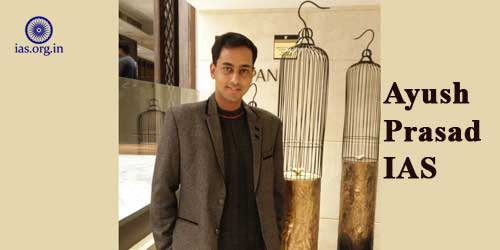
Ayush Prasad has proved that there is no short – cut to success. Ayush’s strong determination led him to become an IAS officer. Becoming an IAS offficer was the result of his, true struggle and hardwork. Ayush Prasad has secured the AIR 24th in the Civil Services Examination.

Asked if he always wanted to take up Civil Services given the long list of officers in his family, Ayush Prasad said, “I was a research engineer and wanted to create new technologies, but when I worked with poor rural women in Andhra Pradesh and Uttar Pradesh I realized that there a lot of social problems in this country and I felt my life would have a greater meaning if I worked with such people rather than trying to create technologies. I believe civil service has wide impact on people’s lives, because the way our country is organized, public institutions play a very important role and my main aim is to somehow reduce poverty in this country.”

Marks Obtained

 Total Marks  Marks Obtained
Total (Written)  1750 779
 Interview 275  206
 Total  2025  985 (48.64%)

Must Read: Topper’s Story – Harshika Singh IAS, AIR – 8, 2011

Family Background

Interestingly, four generations of Ayush’s family, including Ayush Prasad, have been into civil services in a row. Apart from his IPS father, his great grandfather (ICS during British rule) and grandfather (IAS) too had been Civil Servants, making the family perhaps the only one to achieve this rare feat. His father A M Prasad (IPS) is currently the ADGP in Karnataka State Intelligence Department, while his mother Dr Amita Prasad (IAS), is the Joint Secretary in the Ministry of Water Resources, Government of India, and heads the clean Ganga mission. His younger sister Anusha is pursuing Law at Christ University, Bengaluru.

Educational Background

Ayush Prasad did his early schooling at St Aloysius School, Urwa, which he says gave a perfect start to his education. Due to frequent transfers of his parents, he ended up studying in 12 schools across the state. Ayush Prasad  completed his engineering from Manipal Institute of Technology in 2010.

Read Also: Aboli Naravane IAS Tops in Maharashtra

Career of Ayush Prasad

Ayush had earlier worked with the biggest company in India- TATA Consultancy Services (TCS) Innovation Labs where he was part of a team that developed four patents, including mobile wallets. He has also been part of Young India Fellowship (YIF) where he won full scholarship of Rs 12 lac and completed one-year programme in leadership and liberal arts from the University of Pennsylvania. He has also written for various media including All India Radio. Ayush also worked with the the largest Financial Services Organisation – The State Bank of India Group as a Deputy Manager. He has also worked as intern for National Rural Livelihoods Mission at Karnur in Andhra Pradesh and Rae Bareilly in UP.

Optional Paper

Ayush Prasad chose Geography as his optional subject.

Attempts

This was Ayush Prasad second attempt at UPSC.

Preparation Strategy

Ayush Prasad study plan was basically divided into 3-4 phases. In the first phase he tried to develop an understanding of the syllabus and collect as much material as possible. In the second phase Ayush Prasad studied the syllabus systematically and tried to cover each and every topic one by one. In the third phase he worked on presenting the knowledge he had from various sources, so Ayush Prasad developed proper notes on various topics which was very important, and the next phase was about writing answers and structuring the information, his answers were like anyone would write a paper, with abstract introduction, background, supporting information and conclusion.

Also Read: Amrutesh Aurangabadkar IAS – Topper in Maharashtra

Credit of Success

An elated Ayush Prasad said, “I would like to credit this success most importantly to my parents for being a very strong pillar of support and source of inspiration for me, especially my father for giving me proper guidance particularly on how to structure answers and how to study systematically. My father really helped me. I have not taken any coaching, so it was my parents alone and I credit my success to them”.

“It is by god’s grace that I could get this rank and it feels a little overwhelming because it was beyond my own expectactions. Though I have got such ranks in the past in all-India exams, UPSC civil services is by far the toughest exam, so this has a very special place and I feel very grateful to god that I could achieve this”.

Advice for Young Aspirants

Ayush Prasad message for aspiring UPSC candidates is simple:

  • Work hard, work systematically, work smartly, and not make a big deal out of it as it is similar to university exams which anybody takes.
  • Believe you are a very ordinary student and if you can make it anybody in this country can.
  • And in case they are not able to make it, they should remember that there are thousands of other options today. They should not feel disheartened.

Don’t Miss: Smita Sabharwal IAS Topper from Hyderabad – A Role Model for Youth

Once a rising star, chef now feeds hungry (A God for Many)

0

Narayanan Krishnan was a bright, young, award-winning chef with a five-star hotel group, short-listed for an elite job in Switzerland. But a quick family visit home before heading to Europe changed everything.

“I saw a very old man eating his own human waste for food,” Krishnan said. “It really hurt me so much. I was literally shocked for a second. After that, I started feeding that man and decided this is what I should do the rest of my lifetime.”

Krishnan was visiting a temple in the south Indian city of Madurai in 2002 when he saw the man under a bridge. Haunted by the image, Krishnan quit his job within the week and returned home for good, convinced of his new destiny.

“That spark and that inspiration is a driving force still inside me as a flame — to serve all the mentally ill destitutes and people who cannot take care of themselves,” Krishnan said.

Krishnan founded his nonprofit Akshaya Trust in 2003. Now 29, he has served more than 1.2 million meals — breakfast, lunch and dinner — to India’s homeless and destitute, mostly elderly people abandoned by their families and often abused.

“Because of the poverty India faces, so many mentally ill people have been … left uncared [for] on the roadside of the city,” he said.

Krishnan said the name Akshaya is Sanskrit for “undecaying” or “imperishable,” and was chosen “to signify [that] human compassion should never decay or perish. … The spirit of helping others must prevail for ever.” Also, in Hindu mythology, Goddess Annapoorani’s “Akshaya bowl” fed the hungry endlessly, never depleting its resources.

Krishnan’s day begins at 4 a.m. He and his team cover nearly 125 miles in a donated van, routinely working in temperatures topping 100 degrees Fahrenheit.

He seeks out the homeless under bridges and in the nooks and crannies between the city’s temples. The hot meals he delivers are simple, tasty vegetarian fare he personally prepares, packs and often hand-feeds to nearly 400 clients each day.

Krishnan carries a comb, scissors and razor and is trained in eight haircut styles that, along with a fresh shave, provide extra dignity to those he serves.

He says many of the homeless seldom know their names or origins, and none has the capacity to beg, ask for help or offer thanks. They may be paranoid and hostile because of their conditions, but Krishnan says this only steadies his resolve to offer help.

“The panic, suffering of the human hunger is the driving force of me and my team members of Akshaya,” he said. “I get this energy from the people. The food which I cook … the enjoyment which they get is the energy. I see the soul. I want to save my people.”

The group’s operations cost about $327 a day, but sponsored donations only cover 22 days a month. Krishnan subsidizes the shortfall with $88 he receives in monthly rent from a home his grandfather gave him.

Krishnan sleeps in Akshaya’s modest kitchen with his few co-workers. Since investing his entire savings of $2,500 in 2002, he has taken no salary and subsists with the help of his once-unsupportive parents.

“They had a lot of pain because they had spent a lot on my education,” he said. “I asked my mother, ‘Please come with me, see what I am doing.’ After coming back home, my mother said, ‘You feed all those people, the rest of the lifetime I am there, I will feed you.’ I’m living for Akshaya. My parents are taking care of me.”

For lack of funding, the organization has been forced to halt construction on Akshaya Home, Krishnan’s vision of a dormitory where he can provide shelter for the people he helps. Despite the demands and few comforts his lifestyle affords, Krishnan says he’s enjoying his life.

“Now I am feeling so comfortable and so happy,” he says. “I have a passion, I enjoy my work. I want to live with my people.”