Home Blog Page 595

National Food Security Act: Work in Progress

0
National Food Security Act: Work in Progress
Even though the National Food Security Act (NFSA) has been passed by the parliament and notified by the government, concerns about the benefits of the NFSA continue to linger. It has neither satisfied the activists who had fought a long struggle to get this act passed nor has it satisfied the sceptics who see this as mere populism and a waste of public money. Nonetheless, the fact that the bill was adopted unanimously by both houses of parliament with support from most political parties does imply that the NFSA even with its limitations is seen as an effective tool in India’s fight against malnutrition and food insecurity. For the sceptics, much of the debate that preceded the enactment of the NFSA revolved around the issue of cost of the NFSA and its impact on the economy. These ranged from a conservative estimate of Rs 1 Lakh crore to as high as Rs 3 lakh crore per year. However, most of these estimates are either exaggerated and include many other costs not related to the NFSA or are pure and simple fictitious numbers. The actual cost of the NFSA is expected to remain within the proposed limit of Rs 125000 crores as given in the financial memorandum of the bill.
Many of us would not be even aware that in the 1960s India was forced to import wheat from the US under the PL 480 scheme as it suffered from a severe shortage of food grain. The stories of humiliation and pressure to compromise on India’s foreign policy to avail of this facility are now things of the past. The country has moved ahead from the PL 480 phase to a new era of economic reality where it has enacted the National Food Security Act (NFSA)- 2013 which assures food to 67 percent of people in the country who are likely to suffer food deprivation. This indeed marks a giant leap whose impact is going to be multi-dimensional and multi-layered. The guaranteed availability of food to the people, especially those in the below poverty line bracket and belonging to vulnerable section of society will have a significant income effect translating into higher nutritional intake and therefore improved health status. The extra income, it has been argued, could be used for ‘medical or educational expenses.. or to supplement expenses for farm inputs’. Indeed for the families struggling for survival, the assured food grain could allow them a ‘chance to live with dignity’. We often forget that even now two thirds of India’s population hovers around the poverty level. The expenditure on food items is a significant part of their monthly budget. Realising the importance of providing for the basic food requirements of the population, India has a long established Public Distribution System (PDS) which has played a significant role in keeping the chronic hunger at bay and has a strong impact on the reduction of poverty.
The National Food Security Bill (NFSB) was passed by both houses of Parliament, and was given a nod by the President on September 12, 2013, and has now become an Act. The legislation is a landmark, and perhaps the largest food security program in the world. The Act is indeed an important effort to ensure that the majority of population in India has access to adequate quantity of food at affordable prices. It proposes to cover 75 percent of the rural population, and 50 percent of the urban population with an entitlement of 5 kg per person per month of food grains at issue prices of Rs. 2 and 3 per kg for wheat and rice respectively. The poorest households will receive an additional 10 kilograms of food grains per household to protect their existing allocations. The statewise inclusion ratios are determined by the Planning Commission based on a national-level cut-off for per capita consumption to cover 75 percent and 67 percent of rural and urban populations respectively. This article establishes that fiscal implications of the Food Security Act (FSA) are likely to be significant. The food subsidy cost of implementing the FSA is estimated at Rs. 124,502 crores for the fiscal year 2013-14. The cost is estimated to increase to Rs. 140,192 and Rs. 157,701 crores in 2014-15 and 2015-16 respectively. The “incremental” food subsidy over and above the existing Targeted Public Distribution System (TPDS), which is the additional cost to the budget, is estimated at Rs. 23,951 crores. This is equivalent to 0.2 percent of GDP.

Renamed Indian cities

5

Renamed Indian cities

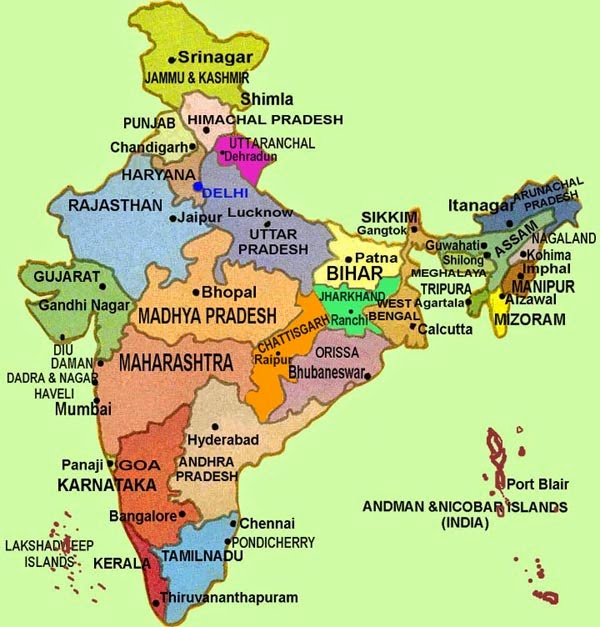
1. Chennai, formerly Madras, renamed in 1996
2. Jabalpur, formerly Jubbulpore, renamed in 1947
3. Kanpur, formerly Cawnpore, renamed in 1948
4. Kochi, formerly Cochin, renamed in 1996
5. Kolkata, formerly Calcutta, renamed in 2001
6. Mumbai, formerly Bombay, renamed in 1995
7. Puducherry, formerly Pondicherry, renamed in 2006
8. Thiruvananthapuram, formerly Trivandrum, renamed in 1991
9. Vadodara, formerly Baroda, renamed in 1974
10. Varanasi, formerly Benares
11. Guwahati, formerly Gauhati
12. Indore, formerly Indhur
13. Kozhikode, formerly Calicut
14. Panaji, formerly Panjim
15. Pune, formerly Poona
16. Sagar, formerly Saugor
17. Shimla, formerly Simla
18. Thanjavur, formerly Tanjore
19. Thoothukudi, formerly Tuticorin
20. Thrissur, formerly Trichur
21. Tiruchirapalli,formerly Trichinopoly or its shortened version, Trichy
22. Udhagamandalam,formerly Ootacamund or its shortened version, Ooty
23. Vijayawada, formerly Bejawada
24. Visakhapatnam, formerly Waltair and before that, Vizagapatnam or its shortened version, Vizag
25. Avantika to Ujjain
26. Vorugallu to Warangal
27. Cambay to Khambhat
28. Bulsar to Valsad
29. Bangalore to Bengaluru (change effective from 1 November 2006)
30. Bhopal Bairagarh to Sant Hirda Ram Nagar, Bhopal
31. Jullunder to Jalandhar
32. Ropar to Rupnagar
33. Mohali to SAS Nagar
34. Nawan Shahar to Shaheed Bhagat Singh Nagar
35. Cape Comorin to Kanyakumari

India – China Relations

2
India China relation

China–India relations, also called Sino-Indian relations or Indo-China relations, refers to the bilateral relationship between the People’s Republic of China (PRC) and the Republic of India. Relationship began in 1950 when India was among the first countries to end formal ties with the Republic of China (Taiwan) and recognize the PRC as the legitimate government of Mainland China.

China and India are the two most populous countries and fastest growing major economies in the world. The resultant growth in China and India’s international diplomatic and economic influence has also increased the significance of their bilateral relationship. China and India are two of the world’s oldest civilizations and have co-existed in peace for millennia.

The Silk Road not only served as a major trade route between India and China, but is also credited for facilitating the spread of Buddhism from India to East Asia. During the 19th century, China’s growing opium trade with the British Raj triggered the First and Second Opium Wars. During World War II, India and China played a crucial role in halting the progress of Imperial Japan.

Relations between contemporary China and India have been characterized by border disputes, resulting in three major military conflicts — the Sino-Indian War of 1962, the Chola incident in 1967, and the 1987 Sino-Indian skirmish. In 2008, China emerged as India’s largest trading partner and the two countries have also attempted to extend their strategic and military relations.

In June 2012, China stated its position that “Sino-Indian ties” could be the most “important bilateral partnership of the century”. That month Wen Jiabao, the Premier of China and Manmohan Singh, the Prime Minister of India set a goal to increase bilateral trade between the two countries to US$100 billion by 2015.

During the BRICS summit in Sanya, Hainan, China the two countries agreed to restore defence co-operation and China had hinted that it may reverse its policy of administering stapled visas to residents of Jammu and Kashmir. This practice was later stopped, and as a result, defense ties were resumed between the two nations and joint military drills were expected.

BRICS summit in New Delhi, India, Chinese President Hu Jintao told Indian Ex-Prime Minister Manmohan Singh that “it is China’s unswerving policy to develop Sino-Indian friendship, deepen strategic cooperation and seek common development” and “China hopes to see a peaceful, prosperous and continually developing India and is committed to building more dynamic China-India relationship”.

Best Inspiring Article For Failures

1

Failure, what would you like hearing about it? Do you know what it means? Do you know why people fail? Do you know what causes them to fail?, well, the answer to all of it is pretty much the same; you know why; because failure is what leads you to success. And this failure will try to curb you into its trap but beware as you might just get away with it.

Every popular influential has failed at least once during his lifetime and perhaps his way to success. The important thing that matters is that they just didn’t give up. Instead, they fought back. Like every ordinary man does, they didn’t. They fought and kept fighting until they were satisfied with their failure. They didn’t repeat their mistakes, nor did they let their faults overcome their determination for success.

Well, nowadays, people think as the end of their life when it comes to struggling. They forget that the moment they give in to struggle they lose their toughness and the spirit to live life. I’d like to remind you all of Thomas Alva Edison. He is widely known as the inventor of the light bulb. To tell you the truth, he had carried out so many failed experiments that once his assistant asked him, “Sir, we have failed that developing a bulb after so many experiments. I think we should give up.” You know what he replied to his assistant’s words? He said, “We’ve been failing so many times because we’ve been using the inappropriate elements in our previous experiments. Those were mistakes we’ve been committing. Let’s just not repeat them now. Now we know what we should not use.”

What does it convey to you? For example, a student tries to solve a math problem. He keeps on practising and practising and on and on. He finally reaches his limit to solve the problem but cannot proceed any further since he is tired of staying focused to the problem. That limit is what enhances your capabilities. It asks you to defeat me so you can test and win against yourself. Albert Einstein once told that, “I am not a special man. I am just curious; I stay with problems longer which is why I succeed.” All you need to develop is the habit of staying with the problems longer and you could win them.

As states a famous proverb, “Take into account a bow and an arrow, before striking into force the arrow is pulled to the bow’s maximum tension. Similarly, life gives us all the pain and failures so that we strive against it and if we do, launches us into what is known as a “successful niche”.

In this world, anyone that you feel is so popular and opulent is because they’ve paid a price for that. They’ve failed and tried and failed and tried, again and again. They’ve gained for their failures.

Polar Satellite Launch Vehicle (PSLV)

0
Polar Satellite Launch Vehicle

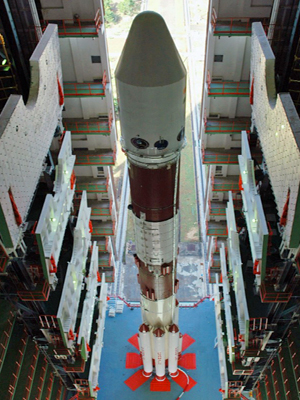
The Polar Satellite Launch Vehicle (PSLV) is an expendable launch system developed and operated by the Indian Space Research Organisation (ISRO). It was developed to allow India to launch its Indian Remote Sensing (IRS) satellites into sun synchronous orbits, a service that was, until the advent of the PSLV, commercially available only from Russia. PSLV can also launch small size satellites into geostationary transfer orbit (GTO).

PSLV is capable of launching 1600 kg satellites in 620 km sun-synchronous polar orbit (SSPO) and 1050 kg satellite in geo-synchronous transfer orbit.

As of 2014 the PSLV has launched 65 satellites / spacecrafts (30 Indian and 35 Foreign Satellites) into a variety of orbits. Some notable payloads launched by PSLV include India’s Chandrayaan-1 lunar probe and the Mars Orbiter Mission. It is the most successful launch vehicle in ISRO, till date, with 25 consecutively successful flights out of 26 launches.

PSLV was designed and developed in the early 1990s at Vikram Sarabhai Space Centre (VSSC), Thiruvananthapuram, Kerala. The inertial systems are developed by ISRO Inertial Systems Unit (IISU) at Thiruvananthapuram. The liquid propulsion stages for the second and fourth stages of PSLV as well as the reaction control systems are developed by the Liquid Propulsion Systems Centre (LPSC) at Mahendragiri (Tirunelveli),Tamil Nadu.

The PSLV had its first launch on 20 September 1993. ISRO met complete success with the third developmental launch in 1996. After a partially unsuccessful launch in 1997, further successful launches followed in 1999 and 2001.

PSLV is a four-stage rocket that uses a combination of liquid fueled and solid fueled rocket stages. The vehicle can fly in three different configurations to adjust for mission requirements.

The first stage is one of the largest solid-fuel rocket boosters in the world and carries 138 tonnes of Hydroxyl-terminated polybutadiene (HTPB) bound propellant with a diameter of 2.8 m. The motor case is made of maraging steel. The booster develops a maximum thrust of about 4,430 kN. Six strap-on motors, four of which are ignited on the ground, augment the first stage thrust. Each of these solid propellant strap-on motors carries nine tonnes of HTPB propellant and produces 677 kN thrust. Pitch and yaw control of the PSLV during the thrust phase of the solid motor is achieved by injection of an aqueous solution of strontium perchlorate in the nozzle to constitute Secondary Injection Thrust Vector Control System (SITVC).

The second stage employs the Vikas engine and carries 41.5 tonnes (40 tonnes till C-5 mission) of liquid propellant – Unsymmetrical Di-Methyl Hydrazine (UDMH) as fuel and Nitrogen tetroxide (N2O4) as oxidizer. It generates a maximum thrust of 800 kN (724 till C-5 mission). Pitch & yaw control is obtained by hydraulically gimbaled engine (±4°) and two hot gas reaction control for roll.

The third stage uses 7 tonnes of HTPB-based solid propellant and produces a maximum thrust of 324 kN. It has a Kevlar-polyamide fiber case and a submerged nozzle equipped with a flex-bearing-seal gimbaled nozzle (±2°) thrust-vector engine for pitch & yaw control. For roll control it uses the RCS (Reaction Control System) of fourth stage.

The fourth and the terminal stage of PSLV has a twin engine configuration using liquid propellant. With a propellant loading of 2 tonnes (Mono-Methyl Hydrazine as fuel + Mixed Oxides of Nitrogen as oxidiser), each of these engines generates a maximum thrust of 7.4 kN. Engine is gimbaled (±3°) for pitch, yaw & roll control and for control during the coast phase uses on-off RCS. PSLV-C4 used a new lightweight carbon composite payload adapter to enable a greater GTO payload capability