

Home Blog Page 607

The Reserve Bank of India (RBI)

2
reseve bank of india

The Reserve Bank of India (RBI) is India’s central banking institution, which controls the monetary policy of the Indian rupee. It was established on 1 April 1935 during the British Raj in accordance with the provisions of the Reserve Bank of India Act, 1934. The RBI plays an important part in the development strategy of the Government of India.

The RBI has been fully owned by the Government of India since its nationalization in 1949.

The Central Office of the RBI initially established in Calcutta (now Kolkata), but was permanently moved to Bombay (now Mumbai) in 1937.

The general superintendence and direction of the RBI is entrusted with the 21-member Central Board of Directors: the Governor (currently Dr. Raghuram Rajan), four Deputy Governors, two Finance Ministry representative, ten government-nominated directors to represent important elements from India’s economy, and four directors to represent local boards headquartered at Mumbai, Kolkata, Chennai and New Delhi.

The Preamble of the RBI describes its basic functions to regulate the issue of bank notes, keep reserves to secure monetary stability in India, and generally to operate the currency and credit system in the best interests of the country.

The National Stock Exchange of India took the trade on in June 1994 and the RBI allowed nationalized banks in July to interact with the capital market to reinforce their capital base. The central bank founded a subsidiary company—the Bharatiya Reserve Bank Note Mudran Limited—in February 1995 to produce banknotes.

The Central Board of Directors is the main committee of the Central Bank. The Government of India appoints the directors for a 4-year term. The Board consists of a Governor, 4 Deputy Governors, 15 Directors to represent the regional boards, 2 from the Ministry of Finance and 10 other directors from various fields.

Main functions of Reserve Bank of India (RBI) are as follows:

  • Bank of issue
  • Monetary authority
  • Regulator and supervisor of the financial system
  • Managerial of exchange control
  • Issuer of currency
  • Manager of foreign exchange

IAS rank-holders prove medium of instruction doesn’t matter

0
IAS rank-holders prove medium of instruction doesn’t matter

It is a tale of two candidates who overcame different odds to emerge successful in the all-important Civil Services examinations, whose results were announced on Friday. While one has proved that poverty is not an impediment to success, the other has shown that there is absolutely no need for coaching centres to clear the country’s top examinations.

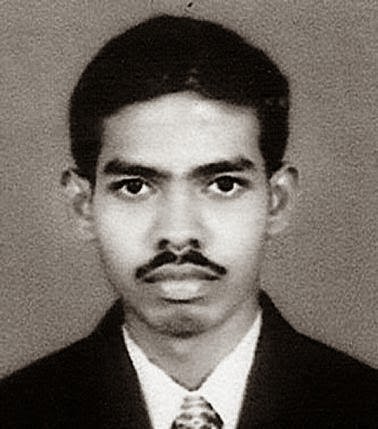
Both of them have brought pride to their families. Gopala Sundara Raj of Ramanathapuram secured 5th place at the all-India level and the first place at the State level and R.V. Karnan of Sri Ram Nagar in Karaikudi in Sivaganga got the 158th rank.

Mr. Raj comes from Mavila Thoppu, a tiny village near Kilakarai. His mother S. Rajammal and father S. Shanmugavel could not study beyond standards III and V respectively.

Though they thought of putting him in English medium school since the early stage, their abject poverty did not allow them to do so.

However, the perceived disadvantages of having studied in the Tamil medium in no way affected his performance in the Civil Services examinations.

“I have no words to describe my happiness. Raj has not studied in a sophisticated atmosphere.

He has brought meaning to our life. The hard work, sheer determination, dedication and sincerity have made him so special in our life. My pain is that his father is no more to hear the happiest news in our lifetime,” says S. Rajammal.

Her family owns no land or house and she is residing in a portion of her brother Mariappan’s house, a retired school headmaster.

His moral support and motivation helped Mr. Raj, who is currently an agricultural scientist in Rajasthan, in his endeavour. His sister, Sundara Yoga Lakshmi, is working with Infosys in Chennai.

Mr Karnan (27) was the all-India topper in the Indian Forest Service examinations in 2007.

His father R. Veeraragavan (56) is working as a librarian at Alagappa Arts College and his mother V. Vijayalakshmi is a sub-registrar in Karaikudi.

“My dream has come true. The Civil Services examinations are all about clearly understanding the methods and patterns well. I didn’t join any coaching classes for the preparations,” Mr. Karnan told The Hindu over phone from Maharashtra, where he is working as Assistant Conservator of Forests.

Greatest Minds Of All Times

1
Greatest Minds Of All Times

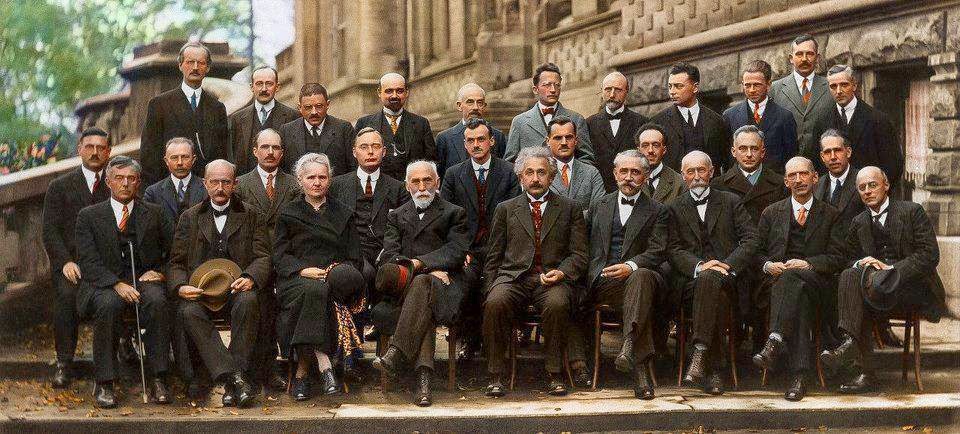
A. Piccard, E. Henriot, P. Ehrenfest, E. Herzen, Th. de Donder, E. Schrödinger, J.E. Verschaffelt, W. Pauli, W. Heisenberg, R.H. Fowler, L. Brillouin; P. Debye, M. Knudsen, W.L. Bragg, H.A. Kramers, P.A.M. Dirac, A.H. Compton, L. de Broglie, M. Born, N. Bohr; I. Langmuir, M. Planck, M. Skłodowska-Curie, H.A. Lorentz, A. Einstein, P. Langevin, Ch.-E. Guye, C.T.R. Wilson, O.W. Richardson

Fifth conference participants, 1927. Institut International de Physique Solvay in Leopold Park.

VERY INSPIRING STORY

0

VERY INSPIRING STORY


A young man asked Socrates the secret to success. Socrates told the young man to meet him near the river the next morning. They met. Socrates asked the young man to walk with him towards the river. When the water got up to their neck, Socrates took the young man by surprise and ducked him into the water. The boy struggled to get out but Socrates was strong and kept him there until the boy started turning blue.

Socrates pulled his head out of the water and the first thing the young man did was to gasp and take a deep breath of air. Socrates asked, ‘What did you want the most when you were there?”

The boy replied, “Air.” Socrates said, “That is the secret to success. When you want success as badly as you wanted
the air, then you will get it.” There is no other secret.

Moral of the Story

A burning desire is the starting point of all accomplishment. Just like a small fire cannot give much heat, a weak desire cannot produce great results..

Human Intelligence : Interaction of Genetic and Environment

0
Human Intelligence

Human intelligence is not only difficult to measure; it’s also difficult to define. Human intelligence is shaped by both internal genetic factors and external environmental circumstances.

Both sociocultural and biological influences in the environment, from stress and nutrition to the family unit, affect the development of human intelligence. Biological influences act on the physical body, while sociocultural influences shape the mind and behavior of an individual.

Environmental factors, such as the diet we eat, and even the neighborhood we choose to live in — be it dangerous or safe — all influence how genes are expressed in our lives. Everything from what we eat to where we live can also affect human intelligence.

Read Also: Activities for Improving Child’s Intelligence

Human Intelligence Quotient (IQ)

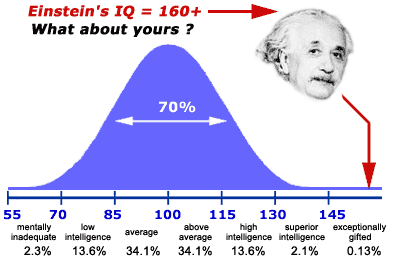
Intelligence — our potential for learning, understanding and reasoning — that’s affected by birth order, but rather our IQ (intelligence quotient). IQ tests measure our intelligence aptitude and compare us to our peers. Firstborn children, on average, score three points higher on IQ tests than their closest, next-born siblings.

The term “nature” refers to how genetics and heritability influence our intelligence, and “nurture” describes how certain environmental factors affect our intelligence. These factors include everything from our family’s parenting style and home environment to how we’re educated and the experiences we have throughout our lives. A quality education and life experiences may enable you to turn an average IQ into a great one over a lifetime.

Prenatal and early nutrition are linked to brain structure, behavior and, yes, intelligence. The greater nutrition in the foods we eat, in the weeks just after birth, the greater the size of the caudate — that’s the part of our brain that specializes in learning and memory — and the greater our verbal IQ scores. And the effects also seem to apply to babies whose prenatal diets were rich in long-chain polyunsaturated fatty acids, such as DHA (docosahexaenoic acid).

The natural genetic make-up of the body interacts with the environment from the moment of conception. While extreme genetic or environmental conditions can predominate behavior in some rare cases, such as the inability of a mute person to speak regardless of their environment, these two factors generally work together to produce a human intelligence level. They are so intertwined that it remains difficult to determine which influence holds the supreme position in shaping human intelligence.

Must Read:

Scientists and Inventors

Peoples Who Changed the World