
Home Blog Page 630

Sardar Vallabhbhai Patel

0

The Sardar Of Sardars
Sardar Vallabhbhai Patel. The barristor, the secular leader, the deputy prime minister of India.
Exactly same date in 1875, the legend born. He was such a personality that no one has guts to oppose his decision. This man played main role in making of India.
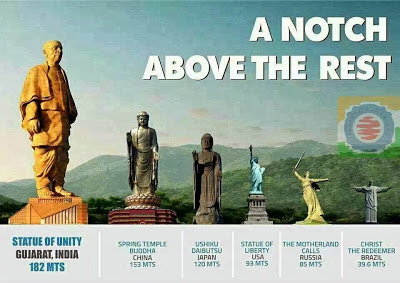
The statue of honor, The Iron Man (not imaginary Robert Downey Jr. But the Real Indian Version). I bow before him and salute the Sardar of Sardars..

Second And Ampere

0

Second (unit of time; Symbol s), the duration of 9,192,631,770 periods of radiation associated with a specified transition of the cesium-133 atom;

Ampere

Ampere (unit of electric current; Symbol A), which is the current that, if maintained in two wires placed one metre apart in a vacuum, would produce a force of 2 x 101 Newton per metre of length;

Metre And Kilogram

0


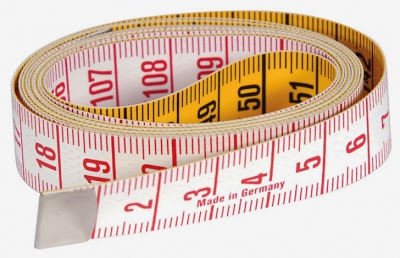
Metre (unit of length; Symbol m) defined as the distance travelled by light in a vacuum in 1/299,792,458 second;

Kilogram

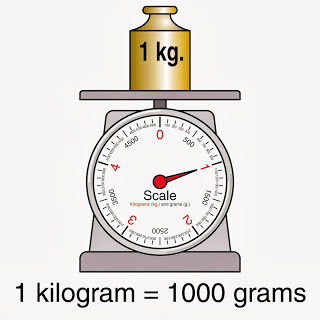
Kilogram  (unit of weight; Symbol kg) which equals 1,000 grams as defined by the international prototype kilogram of platinum-kidium in the keeping of the International Bureau of Weights and Measures;

MEASUREMENTS AND NUMBERS The International System of Units (SI)

0

Based in Sevres, France, the International Bureau of Weights and Measures serves as a depository for the primary international standards and as a laboratory for certification and intercomparison of national standard copies. In 1960, the SI system was built upon the metre-kilogram second system, which has seven basic units. These are :

GENERAL SCIENCE With (H) Abbreviations

0

Histology: The study of tissues.
Horticulture: The cultivation of flowers, fruits, vegetables and ornamental plants.
Hydrodynamics: The mathematical study of the forces, energy and pressure of liquid in motion.
Hydrography: The science of water measurements of the earth with special reference to their use for navigation.
Hydrology: The study of water with reference to its occurrence and properties in the hydrosphere and atmosphere.
Hydrometallurgy: The process of extracting metals at ordinary temperature by bleaching ore with liquids.
Hydrometeorology: The study of the occurrence, movement and changes in the state of water in the atmosphere.
Hydropathy: The treatment of disease by the internal and external use of water.
Hydroponics: The cultivation of plants by placing the roots in liquid nutrient solutions rather than in soil.
Hydrostatics: The mathematical study of forces and pressures in liquids.
Hygiene: The science of health and its preservation.
Limnology : The study of lakes.
Lithology : A systematic study of rocks.
Mammography: Radiography of the mammary glands.
Metallography: The study of the crystalline structures of metals and alloys.
Metallurgy: The process of
extracting metals from their ores.
Meteorology: The science of the atmosphere and its phenomena.
Metrology: The scientific study of weights and measures.
Microbiology7: The study of minute living organisms, including bacteria, moulds and pathogenic protozoa.
Molecular Biology: The study of die structure of the molecules which are of importance in biology.
Morphology: The science of organic forms and structures.
Mycology: The study of fungi and fungus diseases.
Nanotechnology: The technology that is based on the scale of nanometres (10’9m).
Neurology: The study of the nervous system, its functions and disorders.
Neuropathology: The study of diseases of the nervous system.
Nosology : The branch of medicine that deals with the classification of diseases.
Numerology: The study of numbers. The study of the date and year of one’s birth and their influence on one’s future life.