Home Blog Page 580

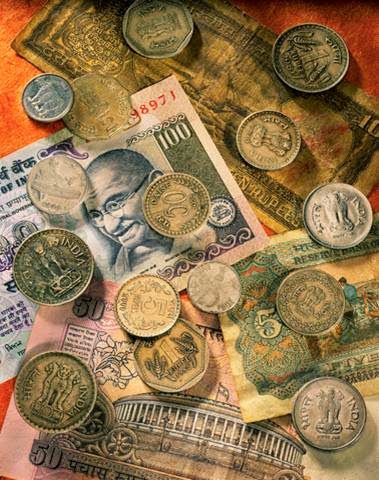
Facts About Indian Currency

1

Facts About Indian Currency

* The first coins were minted (made) around 2500 years ago.
* Paper money was first used in China over 1000 years ago.
* The first “rupee” was first introduced by Sher Shah Suri. It was based on a ratio of 40 copper pieces (paisa) per rupee.
* Udaya K Dharmalingam is the designer of the Indian rupee Symbol, which was adopted by the Government of India in 2010.
* From 1953, Hindi was displayed prominently on the new notes.
* The Government of India took over the issue of bank notes in 1861 from the Private and Presidency Banks.
* The first series of coins with theIndian rupee symbol was launched on 8 July, 2011.
* The first 1000 Rs Note was introduced in 2000.
* The first 20 Rs and 5 Rs note was introduced in 2001.
* Decimalization started in 1957 and the rupee was divided into 100 Naye Paise.
* Total 15 Languages (Apart from English) are printed in Indian Rupee Note. They are Assamese, Bengali, Gujarati, Kannada, Kashmiri, Konkani, Malayalam, Marathi, Nepali, Oriya, Panjabi, Sanskrit, Tamil, Telugu and Urdu.
* In India, the first paper bank note was published by Bank of Hindustan in 1770.
* The current Mahatma Gandhi series of bank notes stared from 1996 with new series of 10Rs notes.
* Indian coins are produced in 4 cities: Noida, Mumbai, Hyderabad, Kolkata. The coins produce from each city puts an identification mark under the year of issue. Coins produced in Noida have a dot mark, Mumbai have diamond mark, Hyderabad have star mark and coin produce from Kolkata have nothing beneath the year.
* Credit cards were first used in the United States in the 1920’s.

World Wildlife Fund (WWF)

1
WWF
WWF

The World Wildlife Fund (WWF) is an international non-governmental organization founded on April 26, 1961, and is working on issues regarding the conservation, research and restoration of the environment formerly named the World Wildlife Fund, which remains its official name in Canada and the United States. It is the world’s largest independent conservation organization with over 5 million supporters worldwide, working in more than 100 countries, supporting around 1,300 conservation and environmental projects. WWF is a foundation.

The group’s mission is “to stop the degradation of the planet’s natural environment and to build a future in which humans live in harmony with nature.” Currently, much of its work focuses on the conservation of three biomes that contain most of the world’s biodiversity: oceans and coasts, forests, and freshwater ecosystems. Among other issues, it is also concerned with endangered species, pollution and climate change.

Read Also: Biodiversity

WWF-India Secretariat is an autonomous office based in New Delhi. WWF International is located at Gland in Switzerland. A specialist office in Brussels works on the policies and activities of the European Union, while a second office in Washington DC, works with global institutions involved with international economic issues, such as the World Bank.

The idea for a fund on behalf of endangered animals was initially proposed by Victor Stolan to Sir Julian Huxley. This proposal led Huxley to put Stolen in contact with Max Nicholson, a person that had had thirty years of experience of linking progressive intellectuals with big business interests through the Political and Economic Planning think tank. Nicholson thought up the name of the organization.

WWF was conceived on 29 April 1961, under the name of World Wildlife Fund, and its first office was opened on 11 September that same year in Morges, Switzerland. Godfrey A. Rockefeller also played an important role in its creation, assembling the first staff. Its establishment marked with the signing of the founding document called Morges Manifesto that lays out the formulation ideas of its establishment.

In 1986, the organization changed its name to World Wide Fund for Nature, to better reflect the scope of its activities, retaining the WWF initials. However, it continues to operate under the original name in the United States and Canada.

Must Read: Wildlife Sanctuaries in India

In order to conserve India’s ecological security, WWF-India has adopted the following steps:

  • Ensuring conservation of the country’s biodiversity, major ecosystems, and critical landscapes
  • Minimizing wasteful consumption and promotion of sustainable and judicious use of natural resources by all sectors of society
  • Promoting the active involvement of rural and traditional communities in the sustainable management and conservation of natural resources
  • Working towards reduction in the impact of climate change
  • Minimizing pollution, reducing the use of toxic chemicals and ensuring improved management of toxic waste
  • Enhancing active participation of all sections of society in nature conservation and environmental protection through environmental education, awareness, and capacity-building
  • Ensuring that the environmental principles are integrated into development planning, policy, and practices
  • Promoting environmental governance through legislation, policy, and advocacy

WWF’s current strategy for achieving its mission specifically focuses on restoring populations of 36 species (species or species groups that are important for their ecosystem or to people, including elephants, tunas, whales, dolphins, and porpoises), and ecological footprint in 6 areas (carbon emissions, cropland, grazing land, fishing, forestry and water).

The only giant panda residing in the Western world at that time, along with its physical features and status as an endangered species, the panda is seen to serve the need of a strong recognizable symbol of the organization. Moreover, the organization also needs an animal that would have an impact in black and white printing. The logo was then designed by Sir Peter Scott from the preliminary sketches made by a Scottish naturalist, Gerald Watterson.

Don’t Miss:

Wildlife Corridors – Elephant Lifeline(s) – of Coimbatore

Countries with the Largest Gold Reserves in the World

Agasthyamala Biosphere Reserve (ABR) Listed by UNESCO

Dr. A. P. J. Abdul Kalam

8
Dr. A. P. J. Abdul Kalam

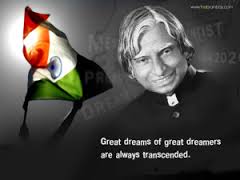
Avul Pakir Jainulabdeen Abdul Kalam usually referred as Dr. A. P. J. Abdul Kalam, is an Indian scientist and administrator who served as the 11th President of India from 2002 to 2007. Kalam was born and raised in Rameswaram, Tamil Nadu, studied physics at the St. Joseph’s College, Tiruchirappalli, and aerospace engineering at the Madras Institute of Technology (MIT), Chennai.

He worked as an Aerospace engineer with Defence Research and Development Organisation (DRDO) and Indian Space Research Organisation (ISRO). Kalam is popularly known as the Missile Man of India for his work on the development of ballistic missile and launch vehicle technology.

He played a pivotal organizational, technical and political role in India’s Pokhran-II nuclear tests in 1998, the first since the original nuclear test by India in 1974. Some scientific experts have however called Kalam a man with no authority over nuclear physics but who just carried on the works of Homi J. Bhabha and Vikram Sarabhai. He narrowly missed achieving his dream of becoming a fighter pilot, as he placed ninth in qualifiers, and only eight positions were available in the IAF.

A.P.J. Abdul Kalam was born in India on October 15, 1931. A lifelong scientist, Kalam’s prominent role in India’s 1998 nuclear weapons tests established him as a national hero. In 2002, India’s ruling National Democratic Alliance helped him win the election against the country’s former president, Kocheril Raman Narayanan; Kalam became India’s 11th president, a largely ceremonial post, in July 2002.

Dr Kalam is one of the most distinguished scientists of India with the unique honour of receiving honorary doctorates from 40 universities and institutions.

The United Nations has recognized Dr Kalam’s 79th birthday as “World Student’s Day”.

After completing his graduation in 1960, Dr A.P.J. Abdul Kalam joined as a scientist in Defense Research and Development Organization’s Aeronautical Development Establishment. At the very start of his career, he designed a small helicopter for the Indian army. He also worked under the renowned scientist Vikram Sarabhai as a part of the committee of INCOSPAR.

He became the Project Director of India’s first indigenous Satellite Launch Vehicle (SLV-III) when he was transferred in 1969 to Indian Space Research Organization (ISRO). In July 1980 his team was successful in deploying the Rohini satellite near the orbit of the Earth.

In his literary pursuit four of Dr. Kalam’s books – “Wings of Fire”, “India 2020 – A Vision for the New Millennium”, “My journey” and “Ignited Minds – Unleashing the power within India” have become household names in India and among the Indian nationals abroad.

Kalam advocated plans to develop India into a developed nation by 2020 in his book India 2020. He has received several prestigious awards, including the Bharat Ratna, India’s highest civilian honour. The Government of India has honoured him with the Padma Bhushan in 1981 and the Padma Vibhushan in 1990 for his work with ISRO and DRDO and his role as a scientific advisor to the Government.

Kalam is known for his motivational speeches and interaction with the student community in India. He launched his mission for the youth of the nation in 2011 called the What Can I Give Movement with a central theme to defeat corruption in India. He also has interests in writing Tamil poetry and in playing veenai, a South Indian string instrument.

He developed a low-cost Coronary Stent along with Dr. Soma Raju, a cardiologist, in 1998. It was named “Kalam-Raju Stent” after them. Both of them also designed a tablet PC called “Kalam-Raju Tablet” for healthcare in rural areas.

Nobel Prize

2
Nobel Prize
Nobel Prize

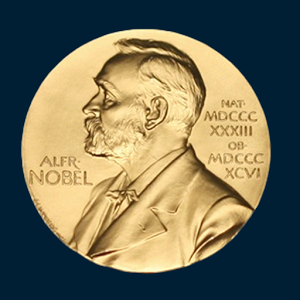
Nobel Prize, any of the prizes that are awarded annually from a fund bequeathed for that purpose by the Swedish inventor and industrialist Alfred Bernhard Nobel. The Nobel Prizes are widely regarded as the most prestigious awards given for intellectual achievement in the world.

The Nobel Prize is a set of annual international awards bestowed in a number of categories by Swedish and Norwegian committees in recognition of cultural or scientific advances. The will of the Swedish inventor Alfred Nobel established the prizes in 1895. The prizes in Physics, Chemistry, Physiology or Medicine, Literature, and Peace were first awarded in 1901.

Must Read: The Nobel Prize Everything you wanted to know

The related Nobel Memorial Prize in Economic Sciences was created in 1968. Between 1901 and 2012, the Nobel Prizes and the Prize in Economic Sciences were awarded 555 times to 856 people and organizations. With some receiving the Nobel Prize more than once, this makes a total of 835 individuals and 21 organizations.

The Peace Prize is awarded in Oslo, Norway, while the other prizes are awarded in Stockholm, Sweden. The Nobel Prize is widely regarded as the most prestigious award available in the fields of literature, medicine, physics, chemistry, peace, and economics.

The Nobel Committee’s Physics Prize shortlist cited Wilhelm Conrad Röntgen’s discovery of X-rays and Philipp Lenard’s work on cathode rays. The Academy of Sciences selected Röntgen for the prize.

Alfred Nobel requested in his last will and testament that his money will be used to create a series of prizes for those who confer the “greatest benefit on mankind” in physics, chemistry, peace, physiology or medicine, and literature. Though Nobel wrote several wills during his lifetime, the last was written a little over a year before he died and signed at the Swedish-Norwegian Club in Paris on 27 November 1895.

Must Read: Nobel Prizes Facts

The Nobel Foundation is the legal owner and functional administrator of the funds and serves as the joint administrative body of the prize-awarding institutions, but it is not concerned with the prize deliberations or decisions, which rest exclusively with the four institutions.

Alfred Nobel was born on 21 October 1833 in Stockholm, Sweden, into a family of engineers. He was a chemist, engineer, and inventor. In 1894, Nobel purchased the Bofors iron and steel mill, which he made into a major armaments manufacturer. Nobel also invented ballistite. This invention was a precursor to many smokeless military explosives, especially the British smokeless powder cordite. As a consequence of his patent claims, Nobel was eventually involved in a patent infringement lawsuit over cordite. Nobel amassed a fortune during his lifetime, with most of his wealth from his 355 inventions, of which dynamite is the most famous.

The Nobel Foundation was founded as a private organisation on 29 June 1900. Its function is to manage the finances and administration of the Nobel Prizes. In accordance with Nobel’s will, the primary task of the Foundation is to manage the fortune Nobel left.

Don’t Miss:

Nobel Prize for Physics

Patrick Modiano Wins Nobel Prize in Literature

Some people have this feeling of insecurity, throughout preparation!

3

some people have this feeling of insecurity, throughout preparation!

1. I’m not from a reputed college.
2. I’ve very low score in graduation, I failed in some semester.
3. I don’t have work-experience or extra-curricular certificates.
4. I’m not from English medium…And so on.

Don’t worry. Many People with such profile have cleared the civil service
exam!

1. When an examiner checks your mains answer sheet he doesn’t know
about all those things.

2. Even in the interview, they don’t really dwell on those topics (unlike IIM
interviews hehehe), and even if they notice it, your interview score
doesn’t depend on a single variable or single question.

3. So stop all those negative thoughts. And avoid the company of any other
person who is spreading such negative vibes.

4. Besides, you can’t go back in History using a time-machine to fix all those things in your life. So just keep moving forward.