
Home Blog Page 348

Marco Polo – An Italian Travelled China and Far East

0
marco polo
marco polo

Marco Polo was a merchant and explorer who travelled throughout the Far East and China for much of his life. He lived from 1254 to 1324. Marco was born in Venice, Italy in 1254. Venice was a wealthy trading city and Marco’s father was a merchant.

The Silk Road

The Silk Road referred to a number of trade routes between major cities and trading posts that went all the way from Eastern Europe to Northern China. It was called the Silk Road because silk cloth was the major export from China.

Marco Polo’s father and uncle wanted to try something different. They wanted to travel all the way to China and bring the goods directly back to Venice. They thought they could make their fortune this way. It took them nine years, but they finally made it home.

Read Also: Famous Explorers and Travellers

Marco’s first travel to China

Marco first left for China when he was 17 years old. His father and uncle decided to return. They had met the Mongol Emperor Kublai Khan during their first trip and had told him they would return. Kublai was leader over all of the China at the time.

Where did he travel?

It took Marco Polo three years to get to China. Along the way, he visited many great cities and saw many sites including the holy city of Jerusalem, the mountains of the Hindu Kush, Persia, and the Gobi Desert. He met a lot of different types of people and had many adventures.

Living in China

Marco lived in China for many years and learned to speak the language. He travelled throughout China as a messenger and spy for Kublai Khan. He even travelled far to the south to where Myanmar and Vietnam are today. During these visits, he learned about different cultures, foods, cities, and peoples. He saw many places and things that no one from Europe had ever seen before.

Marco was fascinated by the wealth and luxury of the Chinese cities and of Kublai Khan’s court. It was nothing like he had experienced in Europe. The capital city of Kinsay was large but well organized and clean. Wide roads and huge civil engineering projects like the Grand Canal were well beyond anything he had experienced back home. Everything from the food to the people to the animals, like orangutans and rhinos, were new and interesting.

How do we know about Marco Polo?

After twenty years of traveling, Marco, along with his father and uncle, decided to head home to Venice. They left home in 1271 and finally returned in 1295. A few years after returning home, Venice fought a war with the city of Genoa. Marco was put under arrest. While he was under arrest, Marco told detailed stories of his journeys to a writer named Rustichello who wrote them all down in a book called The Travels of Marco Polo.

The Travels of Marco Polo became a very popular book. It was translated into multiple languages and read throughout Europe. After the fall of Kublai Khan, the Ming Dynasty took over China. They were very wary of foreigners and little information about China was available. This made Marco’s book even more popular.

Must Read: US Amendment to Provide NATO Ally Status to India

Fun Facts

  • The Travels of Marco Polo was also called Il Milione or “The Million”.
  • The Polo’s travelled home in a fleet of ships that also carried a princess who was to marry a prince in Iran. The journey was dangerous and only 117 of the 700 original travellers survived. This included the princess who made it to Iran safely.
  • Some have speculated that Marco made up much of his adventures. However, scholars have checked his facts and believe many of them are likely true.
  • During the time when the Mongols and Kublai Khan ruled China, merchants were able to elevate themselves in Chinese society. During other dynasties, the merchant was considered lowly and looked down upon as parasites on the economy.
  • Marco had to travel across the great Gobi Desert to get to China. It took months to cross the desert and it was said to be haunted by spirits.

Don’t Miss:

Rediculous facts about China

World’s Earliest Civilizations Egyptian, Sumerian, Indus Valley and Phoenician

When did Maldives Attain Independence?

0
maldives independence

Maldives attain independence completely from the British on July 26, 1965. It became a republic on November 11, 1968. Divehi is the official language of the country.


The Maldives or Maldives Islands, officially the Republic of Maldives, is an island nation in the Indian Ocean formed by a double chain of twenty-six atolls, stretching in a north-south direction off India’s Lakshadweep islands, between Minicoy island and Chagos Archipelago. It stands in the Laccadive Sea, about seven hundred kms southwest of Sri Lanka.

Maldives is spread over an area of 300 sq. km. It features 1,192 islets, of which two hundred islets are inhabited. Maldives’ capital and largest city is Male, with a population of 3,28,536 (January 2012 estimate).

Traditionally, the nation was a king’s island, from where the ancient Maldive royal.

Must Read:

Interesting facts about Indian Independence Day

South Sudan : One Year Of Independence

Rare Colour Video of 1947 – Indian Independence

The Vellore Mutiny 1806

5
vellore mutiny

Vellore was the capital of erstwhile North Arcot district in Tamil Nadu. At present, this district is named after its capital Vellore. It is a well fortified and beautiful city.

With the expansion of the East India Company’s rule in India, the native rulers, and their dependents suffered. The native rulers either submitted or rebelled. These rebellions had no clear vision or ideal but purely motivated by the territorial interest of the native rulers and their ambition to preserve the old feudal order. The heroism and sacrifice of individuals like Puli Thevar, Kattabomman, and Marudu Brothers had no parallel. But all these leaders never organised the common people for a unified and meaningful cause. The ideas of nationalism, political consciousness, and organized struggle came much later.

Must Read: India under Governor Generals

In Vellore, the native sepoys rose in revolt in 1806.This incident differs from other previous rebellions in. The earlier rebellions were those of the native rulers. The Vellore Mutiny was organized by the sepoys. The earlier rebellions had only a regional interest. Every prince wanted to safeguard his own kingdom at any cost. But Vellore Mutiny was the result of the spontaneous outflow of the feelings of the sepoys who served under the Company. It was a protest by the sepoys against the Company. This protest showed the future possibilities.

Causes of Vellore Mutiny

Several causes are attributed to the Vellore Mutiny. Indian sepoys had to experience numerous difficulties when they went to serve in the Company’s army.

The sepoys were forced to serve under the Company since their earlier patrons (the native chieftains) were all disappearing from the scene. The strict discipline, practice, new weapons, new methods, and uniforms were all new to the sepoys. Anything new appears to be difficult and wrong for a man who is well-settled in the old way of life for a long time.
Sir John Cradock, the commander-in-chief, with the -approval of Lord-William Bentinck, the


Governor of Madras, introduced a new form of turban, resembling a European hat. Wearing earrings and caste marks were also prohibited.

The sepoys were asked to shave the chin and to trim the mustache. The sepoys felt that these were designed to insult them and their religious and social traditions. There was also a popular belief that this was the beginning of a process by which all of them would be converted to Christianity.

The English treated the Indian sepoys as their inferior. There was the racial prejudice. This was the psychological base for the sepoy mutinies in India during the Company’s rule.
The sepoys once served the local chieftains (either Hindu or Muslim). The chieftains were their own kinsmen but now they served under the foreigners. They can never forget their original loyalties.

The Vellore uprising was preceded by a series of protests by the Indian troops. In May 1806, the 4th Regiment rose in revolt against the new turban. The Commander-in-Chief took severe action the sepoys who were found guilty were punished with 500 to 900 lashes. Before the mutiny secret associations were formed and meetings held in which Tipu’s family took part.

On June 17th, 1806 a sepoy of the 1st Regiment named Mustapha Beg, secretly informed his commanding officer, Colonel Forbes, that a plot had been planned for the extermination of the European officers and troops. But this was not taken seriously. On the eve of the Mutiny at Vellore Fattah Hyder, the first son of Tipu, tried to form an alliance against the English and sought the help of the Marathas and the French.

Fettah Hyder received secret information through one Mohammad Malick. Besides, princes Fattah Hyder and Moiz-ud-Deen, in particular, were active in planning the execution of the Mutiny.

Must Read: The Revolt 1857: the First War of Independence

Thus, there was the desire to revive the old Muslim rule in this region. The sepoys were aware of the tragic end of Puli Thevar, Khan Sahib, Kattabomman, Marudu Brothers, Tipu Sultan and others. Hence, there were ill-feelings about the British in the minds of the sepoys. All these led to the rebellion.
Course of the Vellore Mutiny

On July 10th in the early morning, the native sepoys of the 1st and 23rd Regiments started the revolt . Colonel Fancourt, who commanded the garrison, was their first victim. Colonel Me Karras of the 23rd Regiment was shot down on the parade-ground. Major Armstrong was the next officer to be killed during the mutiny. About a dozen other officers were also killed.

Major Cootes who was outside the fort dashed to Ranipet, 14 miles away, and informed Colonel Gillespie at 7 am. Col. Gillespie reached the Vellore fort at 9 A.M.
Meantime, the rebels proclaimed Futteh Hyder, Tipu’s first son, as their new ruler and hoisted the tiger-striped flag of Tipu Sultan. But the uprising was swiftly crushed by Col. Gillespie. 800 Indian soldiers were found dead in the fort alone. Six hundred soldiers were imprisoned in Tiruchi and Vellore. Some rebels were hung, some shot dead. The uprising was thus brought to a bloody end. Tipu’s son was sent to Calcutta. The commander-in-chief and the governor were recalled.

Vellore Mutiny failed. There was no proper leadership. The rebellion was also not well organized. But it is the starting point of a new era of the resistance of the sepoys to the British rule. The 18th century was marked by the resistance of the local chieftains. The first six decades of the 19th century was marked by the resistance of sepoys.

K.K. Pillai rejects the thesis that Vellore Mutiny led to the 1857 revolt. V.D. Savarkar calls the Vellore Mutiny of 1806 as the prelude to the first War of Indian Independence in 1857. N. Sanjivi proclaims that the Tamils had taken the real lead in the Indian freedom struggle. K. Rajayyan argues that this mutiny was a continuation of the Marudu Brothers’ resistance movement against the colonial rule.

Also, Read:

Indian National Movement and Rise of Muslim League

0
india pakistan gandhi jinnah

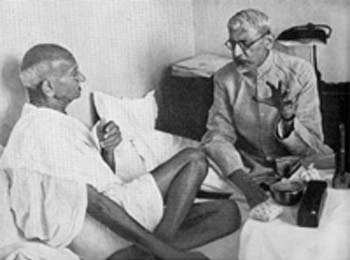
After the death of Sir Syed Ahmad Khan in 1898, the mantle of Aligarh Movement fell upon Nawab Mohsinul Mulk. The Indian Council Act of 1892, although an extremely feeble response to the aspirations of the Indian National Congress founded in 1885, made the Muslim leaders ponder over that the idea of loyalty to the raj propounded by Sir Syed Ahmad Khan was not adequate enough to obtain any considerable concessions for the Muslims from the British Government and that they must organise themselves politically for the fulfilment of their ideals. The permission for use of Hindi as the official language in the courts in U.P. by the Government in 1900 angered the protagonists of Urdu and provided the Muslim leaders an opportunity to organize themselves. They formed an association called Anjuman-e-Urdu at Lucknow with Mohsinul Mulk as the President. The Lieutenant-Governor, A. McDonell, viewed the agitation with misgivings and advised Nawab Mohsinul Mulk to abandon the Urdu agitation or resign from the secretaryship of the MAO College, Aligarh. The Urdu agitation, thus, ended abruptly.

Must Read: National Movement of India: 1920 to 1940

The partition of Bengal on the communal basis by Lord Curzon in 1905 cheered up the protagonists of the Muslim communalism as they thought that the English Government had accepted their separate identity and that the Muslims would be in the majority in the new province. The Viceroy advertised the new province as a Muslim province in a special meeting convened for the purpose at Dacca (Dhaka). The meeting fulfilled its purpose to an extent that the Government was able to obtain the support of a few Muslim leaders to their side. The best opportunity for causing irreparable cleavage between the two communities, however, came to the Government when a Muslim deputation headed by H.H. the Agha Khan waited upon the Viceroy in Simla in 1906, as a result of which separate electorate for the Muslims came to be introduced.

The seeds of the communal representation in the elected bodies were thus sown by the Government causing permanent cleavage between the two communities—the Muslims and the Hindus. It was a great day for the British imperialists. The Viceroy was very happy He had pulled back 62 million Muslims from joining the ranks of the “seditious opposition”. A delegate who met Lady Min to assured her, “His Excellency has kindled love in our hearts. We have always been loyal, but now we feel that the Viceroy is our friend.” The Indian Council Act of 1909, also known as Minto-Morley Reforms gave concrete shape to the assurances extended by the Viceroy to the Muslim delegation. This affixed the seal of Government approval on the theory of two nations for two separate communities, with distinct interests and outlook, which formed the basis of Aligarh Movement.

The grand success of the Simla deputation to Lord Minto emboldened the Muslim leaders to start a separate political organisation. Accordingly, Nawab Salimullah Khan sent invitations for a conference to be held at Dacca in December 1906. It met under the chairmanship of Viqarul Mulk who spoke in Urdu justifying the necessity for the establishment of a separate organization because unless the Muslims were united and were loyal to the British Government, they were in danger of being submerged by the enormous Hindu flood. The All-India Muslim League thus came into being on December 30, 1906, for the promotion of feelings of loyalty to the British, Government among the Muslims and protection and advancement of their political rights.

Read Also: National Movement of India: 1905 to 1920

In its formative years, the Muslim League was not able to win popular support among the Muslims. Many prominent leaders of the community, like Maulana Shibli Naumani, Maulana Mohammad Ali, Maulana Abul Kalam Azad and Mohammad Ali Jinnah were opposed to it. In an article published in the Muslim Gazette of Lucknow, Maulana Shibli Naumani criticised the Muslim League vehemently, stating that the League, to keep up appearances, passed some resolutions of national interest, but everyone knew that it was a fake body.

Maulana Abul Kalam Azad published a news daily, Al Hilal, from Calcutta. It attempted to allay fears and imbibe a new spirit of hope and courage among Muslims. The transfer of the headquarters of the Muslim League from Aligarh to Lucknow and the annulment of the partition of Bengal in December 1911 helped the Muslim League leaders to free themselves from the domination of the British bureaucrats and paved the way for their entry into the mainstream of the national life. The result was the coming together of the Muslim League and the Indian National Congress. The two parties held their sessions in 1915, 1916 and 1917 at Bombay, Lucknow and Calcutta, respectively. The Presidents of the two parties had an exchange of views on national issues and many Congress leaders attended the sessions of the Muslim League. These gestures of goodwill brought about the Lucknow Pact in 1916. The Congress conceded the demand of the Muslim League for the separate electorate and the two parties agreed upon the number of seats to be reserved for the Muslims in various provinces. They also decided on the pattern of demands to be made to the British Government for the achievement of self-governing institutions and repeal of anti-people laws like the Arms Act, the Press Act and the Defence of India Act. ‘ This era of cooperation and fraternity between… the Congress and the League continued to grow unabated for many years. Presiding over the annual session of the Muslim League in 1918 at Delhi,

maulana azad gandhiFazlul Haq stated, “To me, the future of Islam in India seems to be wrapped in gloom and anxiety. Every instance of a collapse of Muslim power in the world is bound to have an adverse influence on the political importance of our community in India.” In 1919, the ulemas formed an association called the Jamiat-Ulama-i-Hind. It extended its full support to the demands of the Khilafat Conference and exhorted the Muslims to join the Non-Cooperation Movement. The Congress, the League, the Khilafat and the Jamiat-Ulama-i-Hind thus acted in unison and fought jointly against the Government. This was bound to create a great stir and unity in the country. For Mahatma Gandhi, it was a godsend opportunity to cultivate the Hindu-Muslim unity. He said, “If the Hindus wish to cultivate eternal friendship with the Musalmans, they must perish with them in the attempt to vindicate the honour of Islam.”
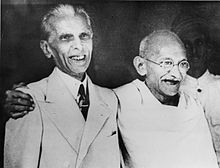
gandhi jinnahThe Muslims and Hindus, therefore, vied with one another in defying the Government. Thousands cheerfully went to jail. They bore the rigours of the lathi charges with utmost calm. Lawyers abandoned the practice, teachers resigned service and students withdrew from schools and colleges. After the Chauri Chaura incident, Gandhiji called off the Non-Cooperation Movement. The Khilafat Movement also lost its relevance after the Khilafat was abolished in 1924. But these movements had certainly given a severe blow to the forces of communalism. The Muslim League lost much of its public appeal. But, unfortunately, there were communal riots after 1923 in the country and a communal Hindu body, the Hindu Mahasabha, emerged to work as a counterpoise to the Muslim League. It advocated sbuddhi and Sangathan, bound to cause anguish in the minds of other communities. The Hindu-Muslim unity achieved during the Khilafat and Non-Cooperation Movements thus proved to be too short lived because the roots of communal antagonism were very deep. But it overwhelmingly demonstrated that the British imperialism would have to pack up if the two communities—the Muslims and the Hindus—were united and fought together against foreign rule.
The Muslim League was split up in 1927 into two factions, one led by Sir Mohammad Shafee and the other by Mohammad Ali Jinnah. Both were unable to muster much support and were functioning as drawing room parties. In 1929, the Nationalist Muslims left the Muslim League to form a new party, the Nationalist Muslim Party. They met at Lucknow in 1931 under the chairmanship of Sir Ali Imam who declared, “If I were asked why I have such abiding faith in Indian nationalism, my answer is that without that India’s freedom is an impossibility. Separate electorate connotes negation of nationalism.” It was evident that the Muslim League was relapsing into oblivion in the national politics of the country, although Jinnah had attempted to give a dose of life to the League by enunciating his famous Fourteen-Point Programme to counter the Nehru Committee Report. He also worked hard to reorganise and consolidate the League. At the Bombay session of the League held in April 1936, Sir Syed Wazir Hasan stated in his presidential address, “In the higher interests of the country, I appeal for unity not only between Hindus and Muslims as such but also between the various classes and different political organisations.” He also enunciated a four-fold programme on whose basis a nationwide movement could be organised and various communities brought together through mutual confidence.

Don’t Miss: The Great Indian Leaders

All this changed for the worse with the formation of provincial ministries by the Congress in July 1937. The clouds of communalism began to gather fast and grow thicker on the skies. The Muslim League castigated the Congress ministries for alienating the Muslims of India more and more by pursuing pro-Hindu policies and making them feel that they could not expect any justice or fair play at their hands. It also whipped up its propaganda against the Congress and pinpointed the latter’s refusal to form the coalition ministries as the proof of its resolve to crush the Muslims.

The reports of the two League committees—the Pirpur Report in U.P. and Sharif Report in Bihar—listed various grievances and atrocities inflicted by the Congress ministries on the Muslims driving a wedge between the Hindus and the Muslims and strengthening the Muslim League. Thus, when in September 1939, the Congress ministries resigned in protest against their country being dragged into the Second World War without consultation and refusal of the British Government to declare the Indian independence, the Muslim League observed a “Deliverance Day” to celebrate the exit of the Congress ministries.

Events followed in quick succession. The Muslim League met in Lahore in March 1940 and passed a resolution that the Muslim-majority regions in the North-West and the Eastern zones of India may be constituted as “Independent States”. They later became the West Pakistan and the East Pakistan on August 14, 1947.

Also Read: Facts about World War 2

The originator of the idea of Pakistan was Sir Muhammad Iqbal (1873-1938) who made a plea for the creation of a Muslim-majority state at the Allahabad session of the Muslim League held in 1930. He declared himself as a Pan-Islamist with the mission of purging Islam of infidels. He enunciated, “I would like to see Punjab, North-West Frontier Province, Sind and Baluchistan amalgamated into a single state. Self-government within the British empire or without the British empire, the formation of a consolidated North-West Indian Muslim State appears to me the final destiny of the Muslims, at least of North-West India.” Rahmat Ali, a student at Cambridge, took the fancy to the idea and communicated it to the Muslim members of the Round Table Conference in London. But none took it seriously. His concept was that Punjab, N.W.F.P. (also known as Afghan Province), Kashmir, Sind and Baluchistan formed the national home of the Muslims called by him Pakistan by taking the initials of the first four and last part of the fifth.

At the Madras session of the Muslim League held in April 1941, Jinnah declared in his presidential address that they did not want a constitution of an all-India character with one Government at the Centre and that they were determined to establish the status of an independent nation. He thus made the creation of Pakistan the main plank of the League.

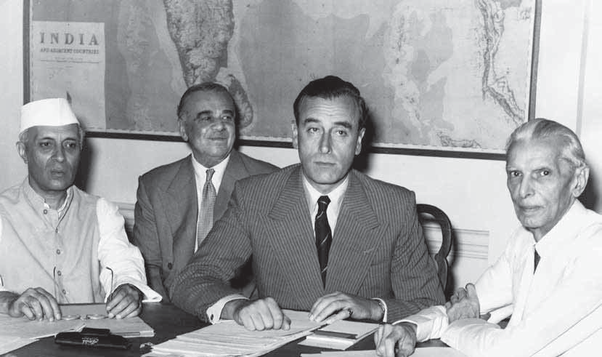
jinnah nehru mountbatten

After the end of the Second World War, elections were held in which the Muslim League captured 446 seats out of a total 495 Muslim seats. When the Cabinet Mission visited India in March 1946, the League pressed its claim for the creation of Pakistan. The Mission rejected the demand and proposed grouping of the Provinces with A, B and C groups under a federation. The League gave a call for the “Direct Action Day” on August 16, 1946, to achieve Pakistan, on which day there were riots in Bengal to demonstrate that the Muslims would not be able to live together with the Hindus. As the Ministers of the interim Government led by Jawaharlal Nehru were being sworn in September 1946, the supporters of the Muslim League were raising slogans “Long Live Pakistan”. The League later joined the interim Government on October 20, 1946, but the two major parties were not working smoothly. The result was the partition plan put forward by Lord Mountbatten in June 1947. It divided the country into two separate dominions of India and Pakistan. Jinnah was the first Governor-General of Pakistan, sworn in on August 14, 1947. It was a day earlier to the date of our destiny, August 15, 1947, when we won our independence (But the same moment of time).

Must Read: 

Rare Colour Video of 1947 Indian Independence

Things to know about Nathuram Godse

Partition of India 1947: A tale of turmoil

Apartheid

1
apartheid

Apartheid was a system in place in South Africa that separated people based on their race and skin color. There were laws that forced white people and black people to live and work apart from each other. Even though there were less white people than black people, apartheid laws allowed white people to rule the country and enforce the laws.

How did it start?

Apartheid became law after the National Party won the election in 1948. They declared certain areas as white only and other areas as black only. Many people protested apartheid from the start, but they were labeled communists and put into jail.

Must Read: History of Slavery in United States

Living Under Apartheid

Living under apartheid was not fair to black people. They were forced to live in certain areas and were not allowed to vote or travel in “white” areas without papers. Black people and white people were not allowed to marry each other. Many blacks, Asians, and other people of color were forced out of their homes and into regulated areas called “homelands.”

The government also took over the schools and forced the segregation of white and black students. Signs were put up in many areas declaring these areas for “white persons only.” Black people who broke the laws were punished or put into jail.

African National Congress (ANC)

In the 1950s, many groups formed to protest against apartheid. The protests were called the Defiance Campaign. The most prominent of these groups was the African National Congress (ANC). Initially, the ANC protests were non-violent. However, after 69 protesters were killed by police at the Sharpeville massacre in 1960, they began to take a more militaristic approach.

Also Read: Peoples Who Changed the World

Nelson Mandela

One of the leaders of the ANC was a lawyer named Nelson Mandela. After the Sharpeville massacre, Nelson led a group called the Umkhonto we Sizwe. This group took military action against the government including bombing buildings. Nelson was arrested in 1962 and sent to prison. He spent the next 27 years in prison. During this time in prison, he became a symbol of the people against apartheid.

Soweto Uprising

On June 16, 1976, thousands of high school students took to the streets in protest. The protests began as peaceful, but as the protesters and police clashed they turned violent. The police fired on the children. At least 176 people were killed and thousands more were injured. One of the first killed was a 13-year-old named Hector Pieterson. Hector has since become a major symbol of the uprising. Today, June 16th is remembered by a public holiday called Youth Day.

Also Read: Nelson Mandela

International Pressure

In the 1980s, governments around the world started to pressure the South African government to end apartheid. Many countries stopped doing business with South Africa by imposing economic sanctions against them. As the pressure and protests increased, the government began to relax some of the apartheid laws.

Ending Apartheid

Apartheid finally came to an end in the early 1990s. Nelson Mandela was released from prison in 1990 and a year later South African President Frederik Willem de Klerk repealed the remaining apartheid laws and called for a new constitution. In 1994, a new election was held in which people of all color could vote. The ANC won the election and Nelson Mandela became president of South Africa.

Must Read: 

African Union (AU)

Communism